Heritage · Meghalaya
Meghalaya Culture: Festivals by Month, Food, Root Bridges
Living Roots and the Cultures of the Rain
Heritage · Meghalaya
Living Roots and the Cultures of the Rain
Photo by Nvr Endng Anupam on Unsplash
In Meghalaya, rain is not simply weather. It shapes the forests, farms, architecture, roads and rhythm of everyday life.
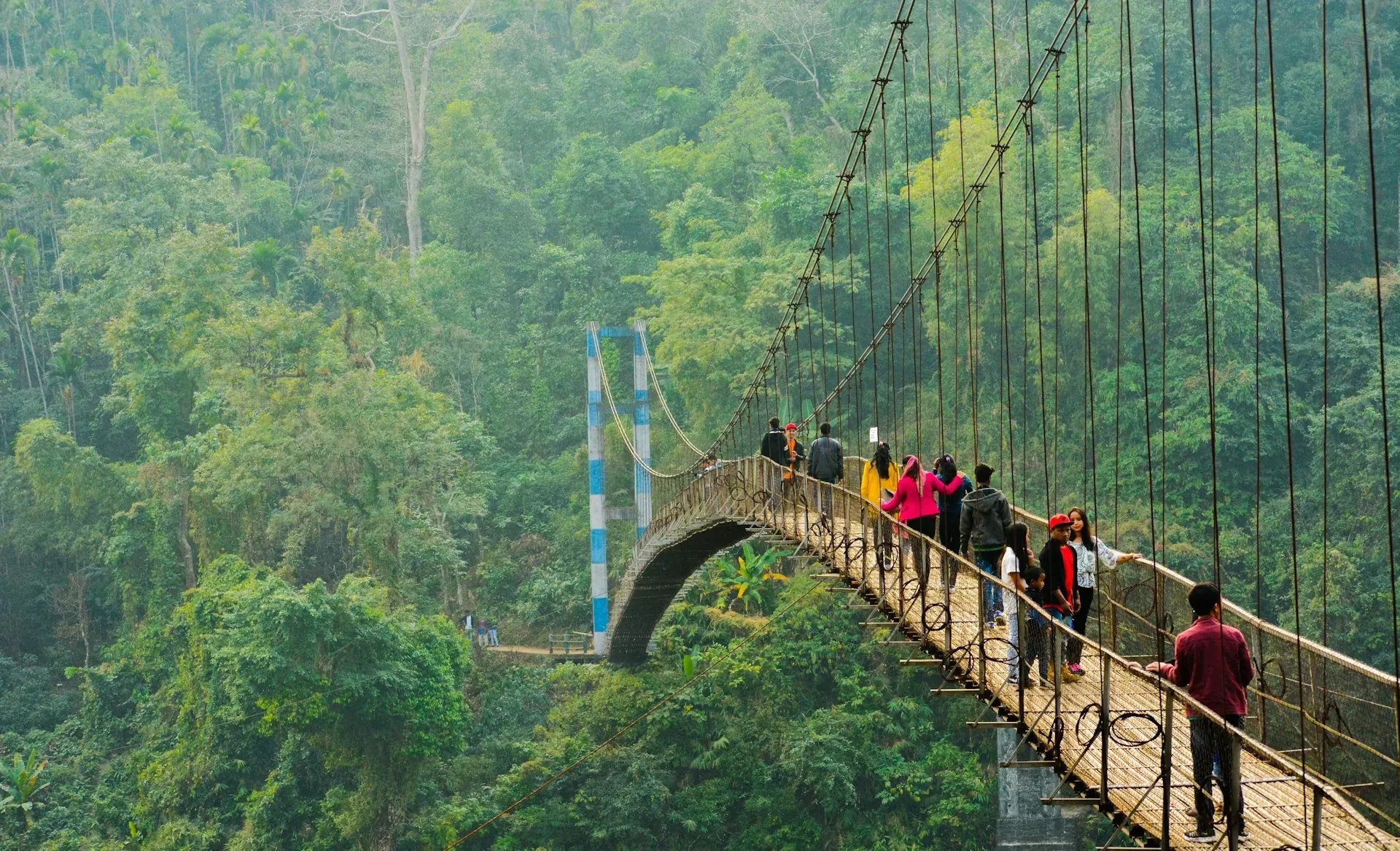
Clouds gather over high plateaus before spilling into deep valleys. Waterfalls appear almost overnight during the monsoon. Villages sit between pine-covered ridges, sacred forests and limestone country, while living bridges are patiently grown across streams from the roots of rubber trees.
But the landscape is only one part of Meghalaya's story.
The state is principally home to the Khasi, Jaintia or Pnar, and Garo peoples, each with distinct languages, traditions, festivals, foods and systems of community life. All three have traditionally followed matrilineal systems in which descent is traced through the mother.
From the dance grounds of Shillong and Smit to the monoliths of Nartiang, the sacred forests of Mawphlang and the drumbeats of Wangala in the Garo Hills, Meghalaya's heritage remains closely tied to the land.
History
The name Meghalaya is often translated as the "abode of clouds", an appropriate description for a plateau rising above the plains of Assam and Bangladesh.
Yet this relatively compact state contains several distinct cultural regions.
The Khasi Hills cover much of central Meghalaya, including Shillong and the high-rainfall landscapes around Sohra and Mawsynram.
To the east lie the Jaintia Hills, historically associated with the Jaintia kingdom and today home to strong Pnar cultural traditions.
The Garo Hills stretch across western Meghalaya, where the Garo people, who commonly refer to themselves as A'chik, maintain traditions that differ in language, food and belief from those farther east.
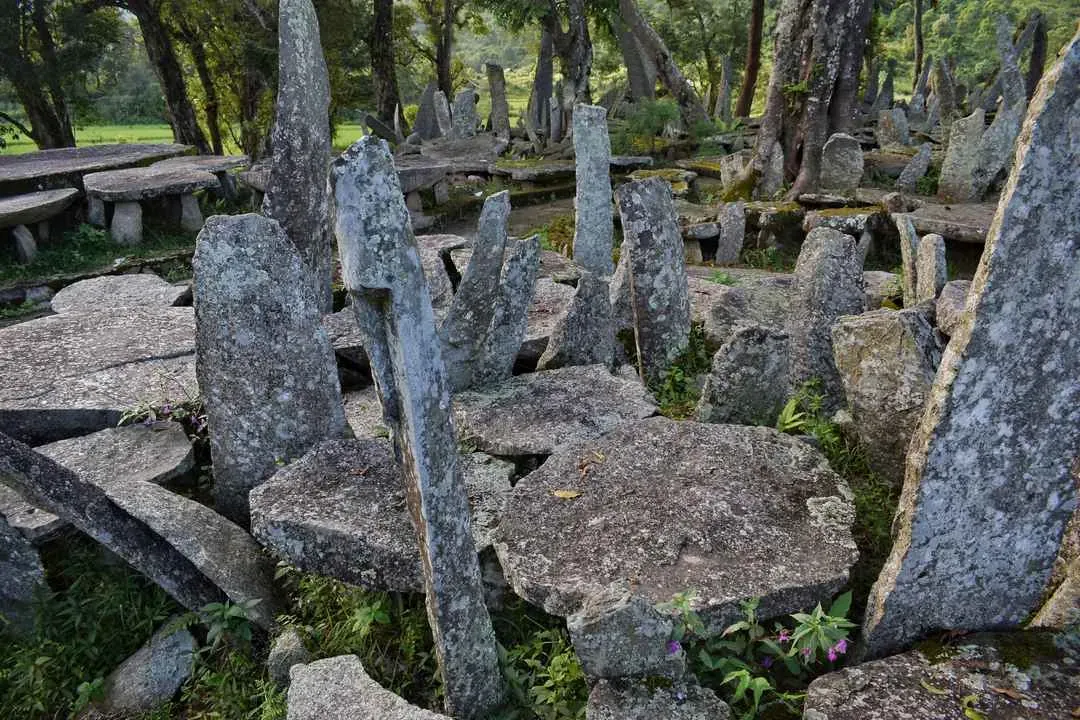
Megaliths scattered across the Khasi and Jaintia Hills point to long-standing traditions of commemorating ancestors through stone. Sacred groves, clan institutions and oral histories preserve other forms of memory that do not depend on written chronicles.
The nineteenth century brought British administration and Christian missionary activity, particularly around Shillong. Shillong became the capital of Assam in 1874 and remained so until Meghalaya emerged as a separate state, achieving full statehood on 21 January 1972.
Christianity today forms an important part of life across much of Meghalaya, while older indigenous beliefs and rituals continue alongside it.
Community
One of Meghalaya's best-known social traditions is matriliny.
Among Khasi, Jaintia and Garo communities, descent is traditionally traced through the mother. This influences family lineage, clan identity and inheritance.
It is important, however, not to simplify this into the common claim that women "rule" Meghalaya. Matriliny is not the same as matriarchy.
Property, household responsibilities, customary law, village institutions and political authority vary between communities. What makes Meghalaya particularly interesting is how these traditions continue to evolve alongside modern education, Christianity, urbanisation and changing family structures.
Visitors encounter this community life most naturally in markets, villages and festivals rather than formal monuments.
Festivals
Meghalaya's festival calendar follows agriculture, ancestral traditions, indigenous faith and the changing seasons.
| Festival | Usual timing | Community / region | What it represents |
|---|---|---|---|
| Shad Suk Mynsiem | April | Khasi | Thanksgiving, spring and the beginning of a new agricultural cycle |
| Behdienkhlam | July | Pnar / Jaintia Hills | Community rituals seeking wellbeing, protection and agricultural blessings |
| Shad Nongkrem | November | Khasi | Religious ceremonies, thanksgiving and ritual dance |
| Wangala | Usually November | Garo | Celebration marking the end of the harvest season |
Festival dates vary slightly each year, so travellers should confirm the exact schedule before planning their visit.
Every April, Shillong hosts one of the most important festivals in the Khasi calendar.
Shad Suk Mynsiem is often translated as the Dance of Peaceful Hearts. It takes place after the harvest and before the sowing of new seeds, giving thanks for the previous year while looking towards the next agricultural cycle.
Women dressed in traditional silk garments and elaborate jewellery dance at the centre while men carrying ceremonial swords and whisks move around them.
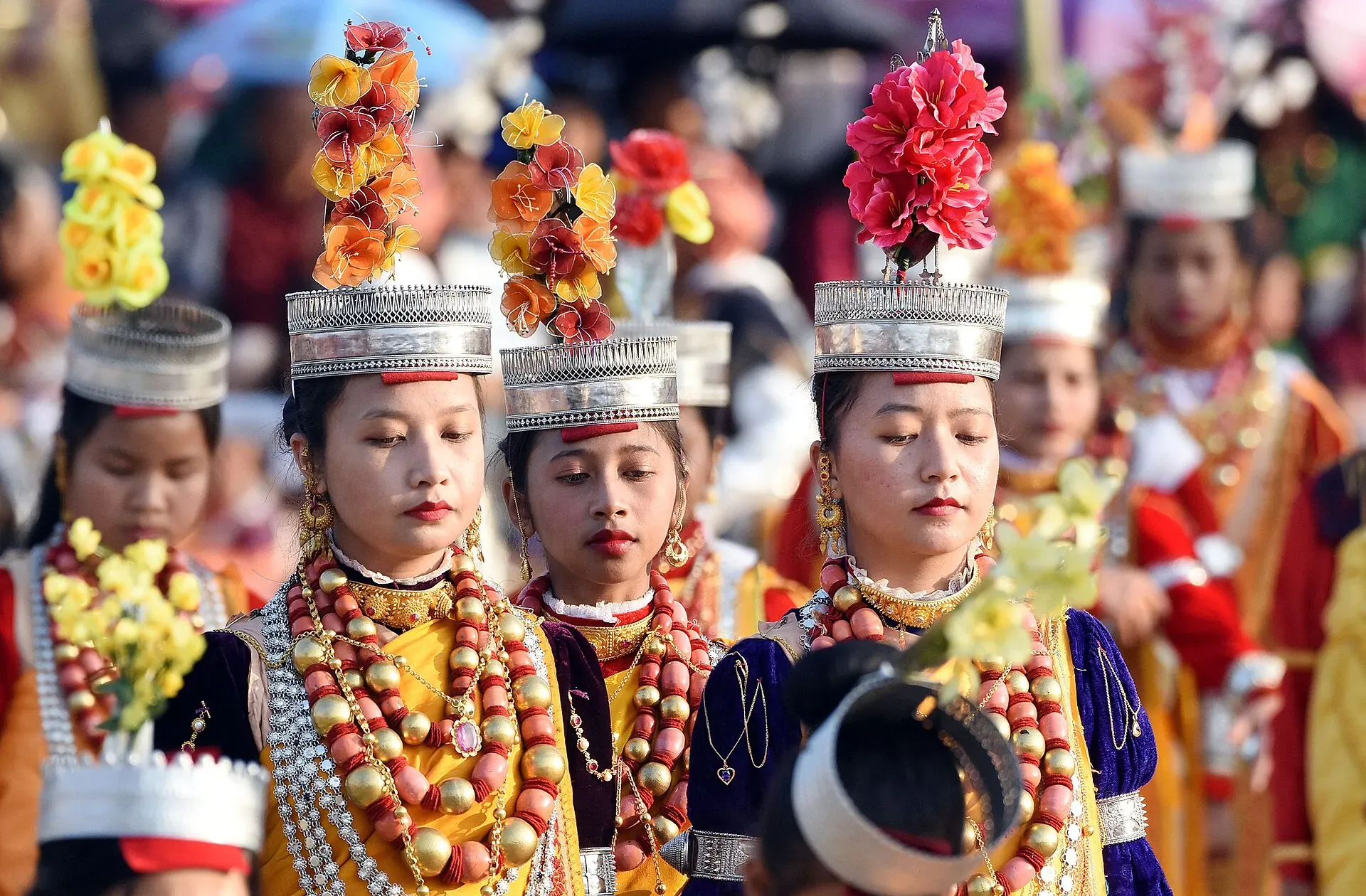
For travellers interested in traditional clothing, jewellery, music and dance, April is one of the most rewarding times to be in Shillong.
In July, during the monsoon, the focus shifts east towards Jowai and the Jaintia Hills.
Behdienkhlam is an important festival among practitioners of the indigenous Niamtre faith. Its ceremonies seek protection from disease and misfortune while offering prayers for wellbeing and a successful agricultural season.
Large decorated structures are carried through the town, accompanied by music, dance and communal rituals.
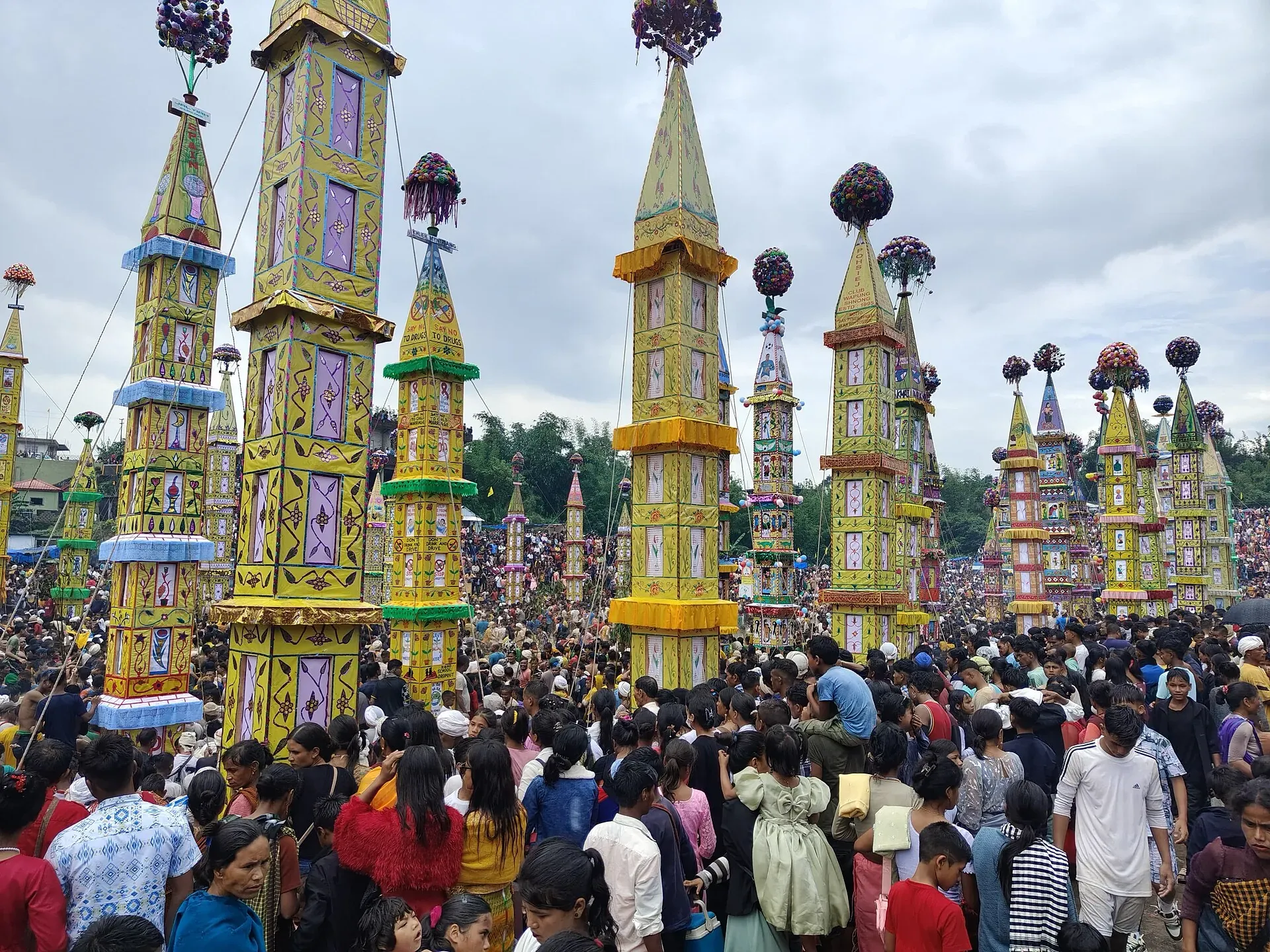
One distinctive tradition is Dat-lawakor, a ceremonial game played using a wooden ball.
Held in Smit, near Shillong, Shad Nongkrem is an important Khasi religious and cultural festival associated with the traditional Khyrim kingdom.
The festival usually takes place in November and includes several days of ritual observances. On the principal dance day, young women in elaborate traditional attire perform alongside men carrying ceremonial swords.
In the Garo Hills, the end of the harvest season is celebrated with Wangala.
Often called the 100 Drums Festival, Wangala gives thanks following the agricultural year. Drummers provide the driving rhythm while lines of dancers in traditional dress move across the festival ground.
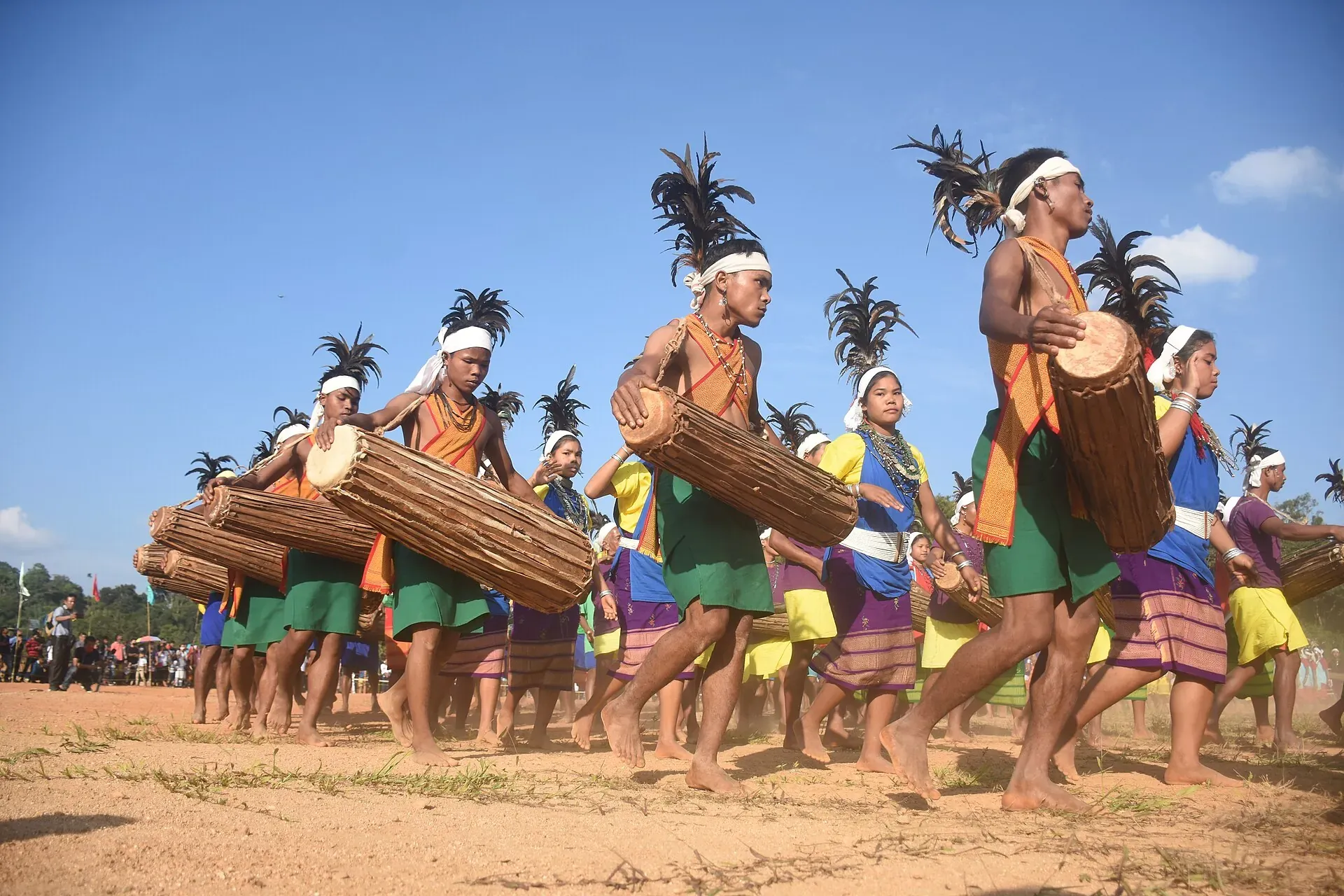
The largest organised celebration usually takes place in November.
For travellers who want to experience Garo culture rather than limiting their Meghalaya journey to Shillong and Sohra, Wangala provides a compelling reason to travel west.
Music
Music occupies an unusually visible place in Meghalaya.
Traditional drums, pipes and ceremonial songs remain central to festivals such as Shad Suk Mynsiem, Nongkrem, Behdienkhlam and Wangala. These are not simply performances created for visitors. They remain part of religious observance, agricultural celebration and community identity.
At the same time, Shillong has developed a very different musical identity.
Rock, blues, gospel, western classical music and contemporary independent music have become deeply embedded in the city's cultural life. Live music can be heard in cafés, festivals, churches and performance spaces.

This contrast is part of what makes Meghalaya interesting: heritage here does not require rejecting contemporary culture.
Textiles
Textile traditions vary considerably between Khasi, Jaintia and Garo communities.
One of Meghalaya's most distinctive textiles is ryndia, the local form of eri silk.
Eri fibres produce a soft, warm fabric suited to the cooler hill climate. Spinning, dyeing and weaving remain closely associated with village households and artisan groups, with skills often passed between generations.
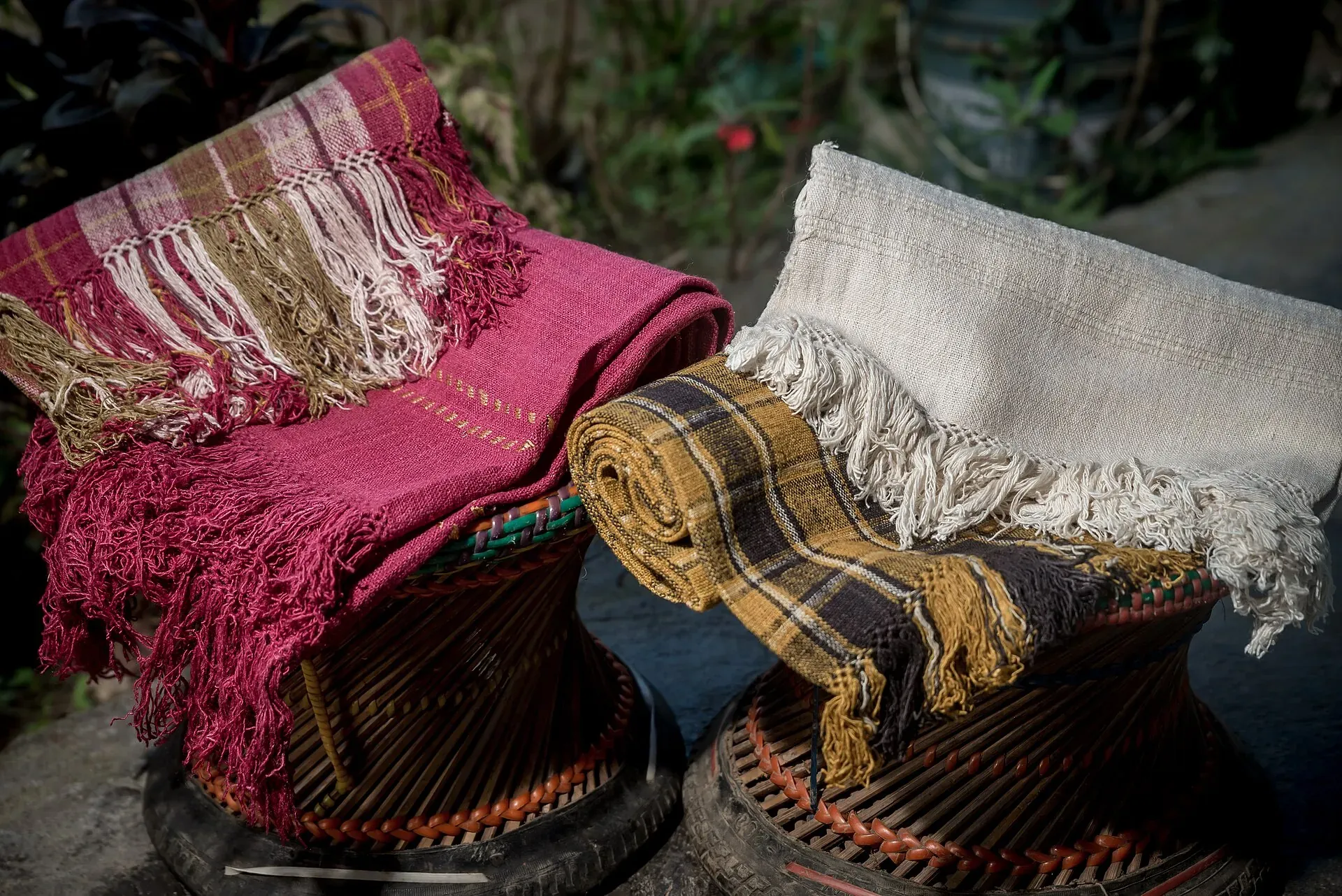
Natural dyes and restrained earthy colours give much ryndia weaving a character quite different from the brighter silks associated with neighbouring Assam.
Traditional Khasi women's clothing includes the jainsem, a layered draped garment, and the more elaborate dhara worn for ceremonial occasions.
Festival attire may include silk, coral, silver and gold jewellery, producing some of the most striking visual scenes during Shad Suk Mynsiem and Nongkrem.
Among Garo women, the dakmanda is a distinctive handwoven wrap worn around the waist.
Patterns and borders vary according to occasion and community, and contemporary weavers continue to reinterpret the garment while preserving traditional techniques.
Meghalaya is also known for khneng embroidery, traditionally worked onto eri fabric. Its patterns add another layer to the state's textile identity.
Crafts
In a landscape where bamboo grows abundantly, craftsmanship developed naturally around it.
Khasi artisans create items such as the khoh, a conical carrying basket, and the knup, a large bamboo rain shield designed for working outdoors in heavy rainfall.
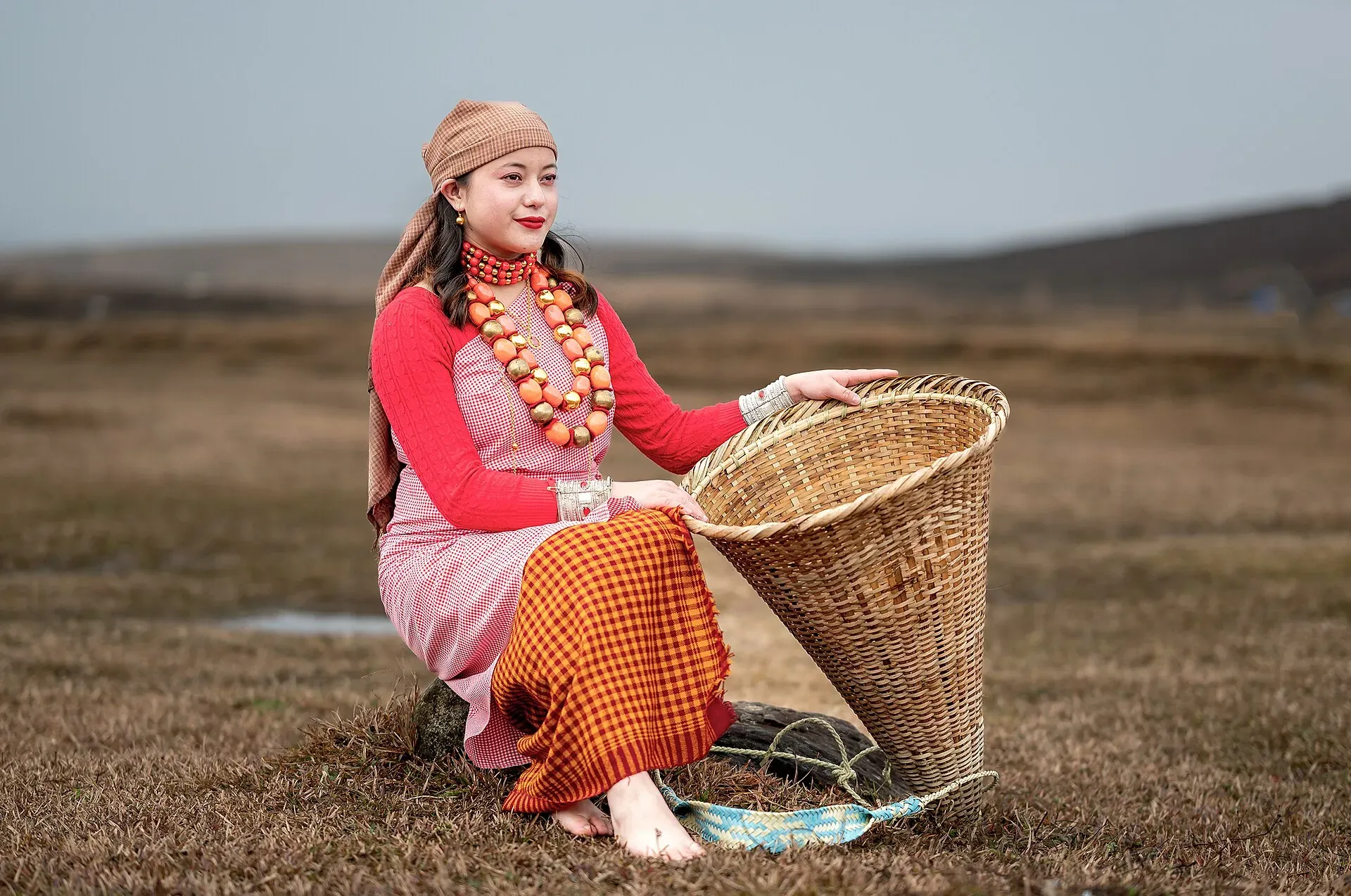
Basketry, mats, furniture and agricultural tools are made across Khasi, Jaintia and Garo areas, with forms varying according to local use.
One of the state's most distinctive crafts can be found in Larnai village in the Jaintia Hills.
Here artisans make khiew-ranei, commonly called Larnai black pottery. Black clay is mixed with crushed serpentine stone, shaped largely by hand and fired using traditional methods.
These are the kinds of experiences worth seeking out in Meghalaya: not simply buying a finished object, but understanding why it exists and how it is made.
Cuisine
There is no single Meghalayan cuisine.
Khasi, Jaintia and Garo kitchens use different techniques and ingredients, although rice, pork, smoked meats, fermented foods, sesame, bamboo, local greens and seasonal produce appear frequently.
Markets are particularly useful places to understand this food culture. Wild herbs, mushrooms, edible ferns, roots and other foraged produce still form part of the state's culinary landscape.
The most widely recognised Khasi dish is jadoh, traditionally prepared with rice and pork.
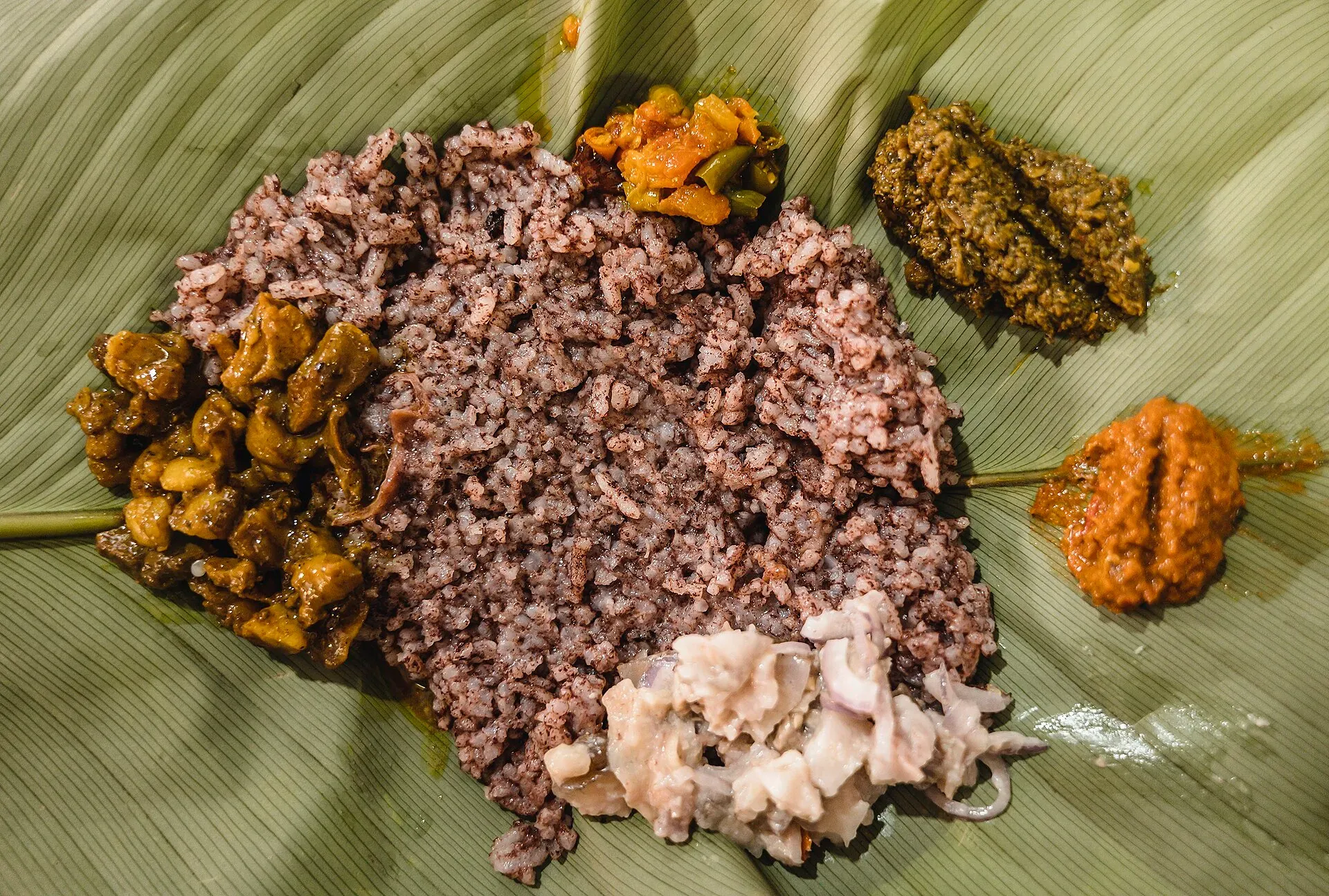
It is commonly served alongside other Khasi dishes and can be found at small food stalls across Shillong and the Khasi Hills.
Dohkhlieh is a pork preparation commonly described as a salad, combining cooked pork with onion, chilli and seasoning.
Its simplicity is characteristic of many local dishes, where strong primary ingredients are allowed to remain prominent.
Tungrymbai uses fermented soybean, cooked with sesame and other ingredients.
The flavour is deep, savoury and distinctly fermented, making it a good choice for travellers looking beyond the most familiar restaurant dishes.
Pork cooked with black sesame is another important preparation, particularly associated with Khasi and Pnar kitchens.
The roasted sesame gives the dish its dark colour and rich, nutty flavour.
In Garo cuisine, dried fish plays an important role.
Na∙kam Bitchi is a spicy preparation made with dried fish, usually served with rice.
Another Garo dish, Do∙o Kapa, combines chicken with natural potash and fresh herbs.
The use of alkaline ingredients is one example of how local cooking techniques developed around ingredients available within the region.
In Jaintia cuisine, dakharang or kharang refers to smoked fish that may be prepared as a curry, chutney or salad.
A particularly satisfying local combination pairs boiled potatoes, or phan, with tungtap, a fermented dry-fish chutney containing chillies and onions.
The best approach is not to search for one restaurant serving a checklist of "Meghalaya food." Eat in different parts of the state and allow the cuisine to change with the landscape.
Places
Shillong is the most natural starting point.
Beyond its cafés, colonial-era streets and contemporary music culture, the city introduces visitors to Meghalaya through its markets, museums, food and festivals.
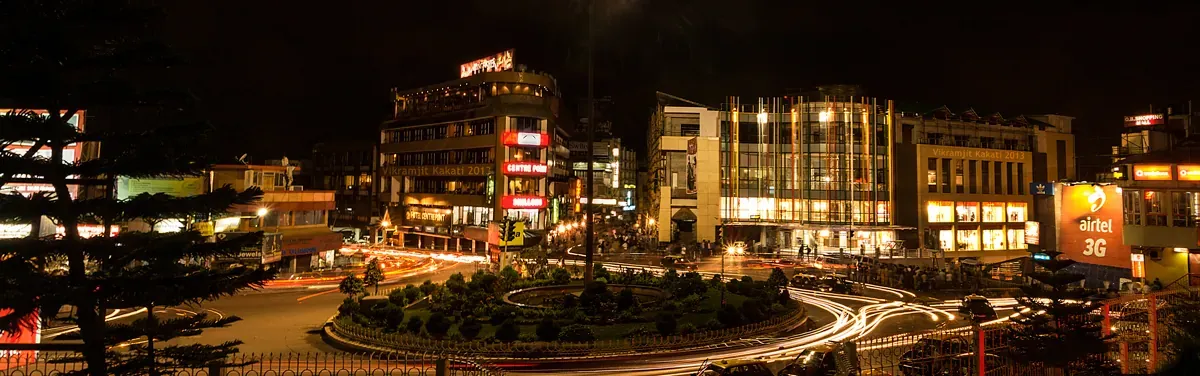
Spend time walking rather than using Shillong only as a base for day trips. Markets and neighbourhood restaurants reveal far more about everyday Meghalaya than a sightseeing checklist alone.
Around 25 kilometres from Shillong lies one of Meghalaya's most important cultural landscapes.
The Mawphlang Sacred Grove, or law kyntang, has been protected for generations through Khasi customs and beliefs. Visitors are traditionally expected not to remove anything from the forest, including leaves, stones or twigs.
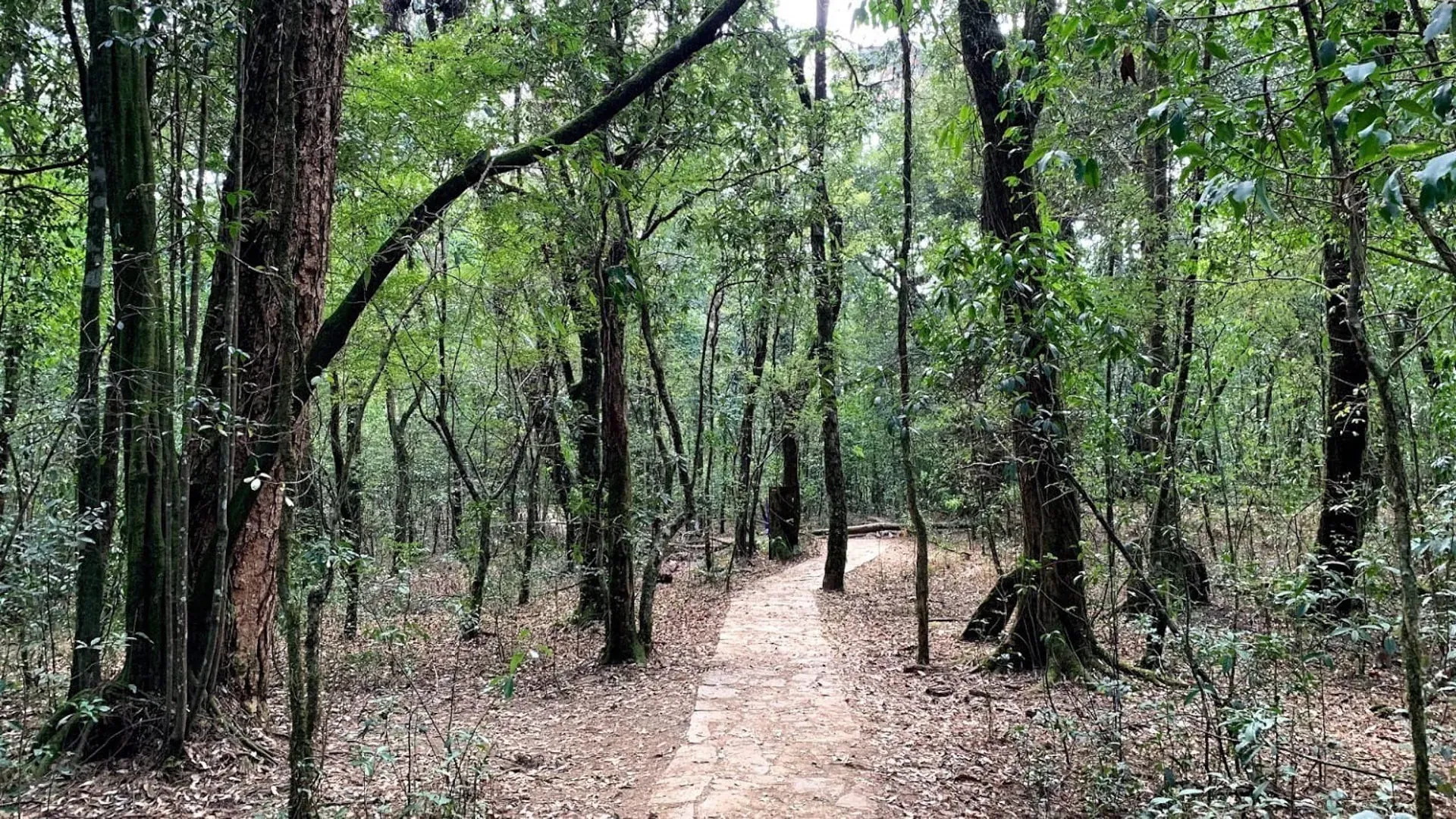
Walking inside with a local guide offers insight into both biodiversity and the relationship between customary belief and conservation.
Nearby monoliths and the Khasi Heritage Village add further context.
Sohra, historically known as Cherrapunji, is famous for rain and waterfalls, but the most meaningful experience lies deeper within the surrounding villages.
Here, Khasi communities have developed living root bridges by guiding the aerial roots of rubber trees across streams and ravines until they form usable crossings.
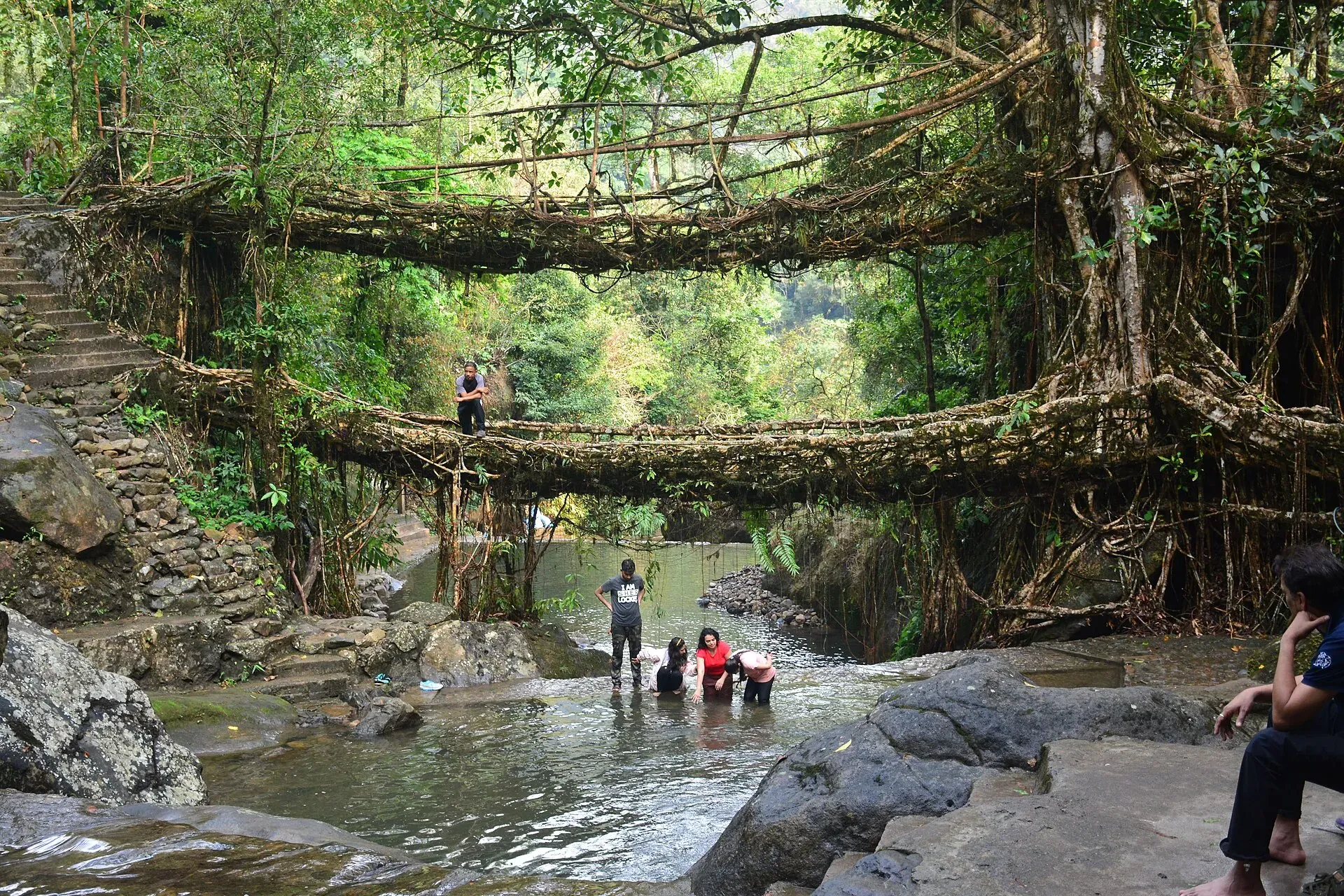
They are not monuments built at a single moment. They are living structures that require years of training, maintenance and intergenerational knowledge.
The well-known double-decker bridge near Nongriat requires a demanding descent and climb, so travellers should allow adequate time and assess their fitness before attempting it.
The Jaintia Hills contain some of Meghalaya's most compelling archaeological landscapes.
At Nartiang, standing stones and horizontal stone slabs form an extensive megalithic complex associated with ancestral commemoration and the history of the Jaintia kingdom.
Combine Nartiang with Jowai rather than treating the Jaintia Hills as a quick detour from Shillong.
For travellers interested in craft, continue into the Jaintia Hills to Larnai.
Local artisans still make black pottery from clay and serpentine stone without relying on a conventional potter's wheel. Visitors can see the process and purchase directly from makers.
In the East Khasi Hills, Kongthong preserves an unusual oral tradition known as Jingrwai Iawbei.
A mother composes a distinctive melody for her child, and these melodic calls continue to be used as forms of identification within village life. The tradition has led to Kongthong becoming widely known as Meghalaya's "Whistling Village."
The value of visiting lies not simply in hearing the melodies but in understanding the community tradition behind them.
The Umngot River near Dawki and Shnongpdeng runs clear enough in the drier months that boats appear to float above the riverbed.
It is a working river as much as a photographed one — a border crossing, a fishing ground and a route that has shaped settlement along this southern edge of the state. Forested hills rise on both sides, and Bangladesh begins just beyond.
Travellers who only visit Shillong, Sohra and Dawki see only one part of Meghalaya.
The western Garo Hills have a noticeably different cultural identity and landscape.
Around Tura, travellers can continue towards villages, forests and destinations such as Nokrek. Farther south, Balpakram holds an important place in Garo folklore as well as being a remarkable ecological landscape.
November is particularly rewarding because it can coincide with Wangala celebrations.
Planning
For a broad first journey, October to April is generally the easiest period for travelling through Meghalaya. The weather is cooler, skies are clearer and trekking, caves, rivers and village routes are usually more accessible.
But Meghalaya changes dramatically with the seasons.
If the objective is waterfalls, visit during or immediately after the rains.
If the objective is road trips, trekking, river activities and village exploration, favour the drier months.
Getting there
For most travellers, the journey to Meghalaya begins in Assam.
Lokpriya Gopinath Bordoloi International Airport in Guwahati is the main air gateway for Meghalaya. Shillong also has an airport at Umroi, but flight options are more limited. The road journey from Guwahati Airport to Shillong is around 125 kilometres and commonly takes three to four hours depending on traffic and weather.
Meghalaya does not have a major railway network serving its principal tourist destinations. For most visitors, Guwahati Railway Station is the practical rail gateway. Taxis, shared vehicles and buses connect Guwahati with Shillong and other parts of the state.
The Guwahati–Shillong journey is one of the easiest interstate transitions in Northeast India.
The road climbs from the Brahmaputra Valley into the Khasi Hills, passing Umiam Lake before reaching Shillong.

From Shillong, travellers can build separate circuits towards Sohra and Nongriat, Mawphlang and Mawsynram, Dawki and Pynursla, Jowai and the Jaintia Hills, or farther west towards Tura and the Garo Hills.
Do not try to cover all of Meghalaya through day trips from Shillong. Distances can be deceptive, roads are winding and many of the most rewarding places deserve an overnight stay.
Before the hills
For many visitors travelling to Meghalaya, Guwahati is more than an airport or railway connection.
Flights and trains often mean spending an evening in the city before driving to Shillong the next morning. Rather than treating that transit night as time between destinations, it can become the first experience of the Northeast.
An Alfresco Grand cruise on the Brahmaputra is an easy way to spend that evening.
The Sunset Cruise departs at 5:30 PM and returns by 6:30 PM — enough time to watch the light change over the river and still have your evening. The Dinner Cruise departs at 7:30 PM and runs until 9:00 PM, with a buffet dinner and live Bihu, Sattriya and Gayan Bayan performances on deck. Both sail from the Guwahati riverfront, about half an hour from most city hotels — the boarding point moves with the river's seasons, and your exact point is printed on your boarding pass.
The next morning, the landscape changes completely as you leave the Brahmaputra Valley and climb towards Umiam Lake, Shillong and the Khasi Hills.
It turns a transit stay in Guwahati into the beginning of the journey.
Good to know
Meghalaya is known for its Khasi, Jaintia and Garo cultures, heavy monsoon rainfall, living root bridges, sacred forests, waterfalls, limestone caves, traditional festivals, music and matrilineal social traditions.
Important festivals include Shad Suk Mynsiem in April, Behdienkhlam in July, Shad Nongkrem in November and Wangala during the Garo harvest season, with the major celebrations usually taking place in November.
Start with jadoh, dohkhlieh, tungrymbai and pork with black sesame in the Khasi and Jaintia Hills. In the Garo Hills, look for dishes such as Na∙kam Bitchi and Do∙o Kapa.
Khasi, Jaintia and Garo communities have traditionally followed matrilineal systems in which descent is traced through the maternal line. Customs differ between communities, and matriliny should not be confused with matriarchy.
October to April is generally best for a broad sightseeing itinerary. Visitors interested in Meghalaya's dramatic monsoon landscape may prefer June to September, while April, July and November are particularly useful months for planning trips around major cultural festivals.
Shillong is around 125 kilometres from Guwahati Airport, with the road journey commonly taking three to four hours depending on traffic, weather and road conditions.
Indian nationals generally do not require a standard entry permit for Meghalaya. Requirements for foreign visitors and travel near certain international border areas can differ, so current rules should be checked before travel.