
Heritage · Nagaland
Culture and Traditions of Nagaland: Festival Months, Food
Villages, Festivals and Stories Woven in the Hills
Heritage · Nagaland
Villages, Festivals and Stories Woven in the Hills
Photo by Arindam Saha on Unsplash
In Nagaland, identity often begins with the village.
Settlements rise along ridgelines overlooking forests and cultivated slopes. Shawls carry patterns connected with community and tradition. Songs preserve memories that were passed orally between generations, while festivals mark sowing, harvest, thanksgiving and the changing agricultural year.
Nagaland is frequently introduced through the Hornbill Festival, where cultural groups from across the state gather each December. But beyond the festival grounds lies a much more varied cultural landscape.
The Angami world around Kohima is different from Ao country around Mokokchung. Farther north, the Konyak villages of Mon have their own language, architecture and histories, while Lotha, Sumi, Chakhesang, Phom, Sangtam, Rengma, Yimkhiung and other communities maintain equally distinct traditions.
The state is home to 17 major tribes along with other sub-tribes, each distinguishable through customs, language and dress.
To understand Nagaland, it helps to move beyond the idea of one Naga culture and begin exploring the many communities that make up the state.
Community
Before modern administrative boundaries were drawn, village communities were central to political, social and cultural life across the Naga Hills.
Traditions differed from one community to another, but village institutions, agriculture, oral history, communal labour and strong systems of customary practice shaped everyday life across much of the region.
Stories were carried through songs, folktales and oral narratives. Traditional houses, ceremonial spaces and the morung, historically a community institution and youth dormitory in several Naga societies, played an important role in passing knowledge between generations.
Music continues to occupy a particularly important place in Nagaland. Folk songs about ancestors, warriors, love and village histories form part of this oral inheritance, alongside the gospel and contemporary music that have become equally visible in modern Naga life.
Christianity, particularly Baptist Christianity, has had a profound influence since the nineteenth century. Churches today are central institutions in many towns and villages, while older songs, textiles, agricultural festivals and customary traditions continue alongside contemporary religious life.
The result is not a culture frozen in the past, but one constantly negotiating tradition and change.
British administration expanded into parts of the Naga Hills during the nineteenth century, altering political relationships that had previously centred largely on independent village communities.
After Indian independence, questions surrounding Naga political identity became increasingly significant. In 1957, the Naga Hills District and the Tuensang Frontier Division were brought together as the Naga Hills Tuensang Area. Following the 16-Point Agreement reached between the Naga People's Convention and the Government of India in 1960, Nagaland was formally inaugurated as India's 16th state on 1 December 1963.
Another major chapter in Nagaland's recent history unfolded during the Second World War.
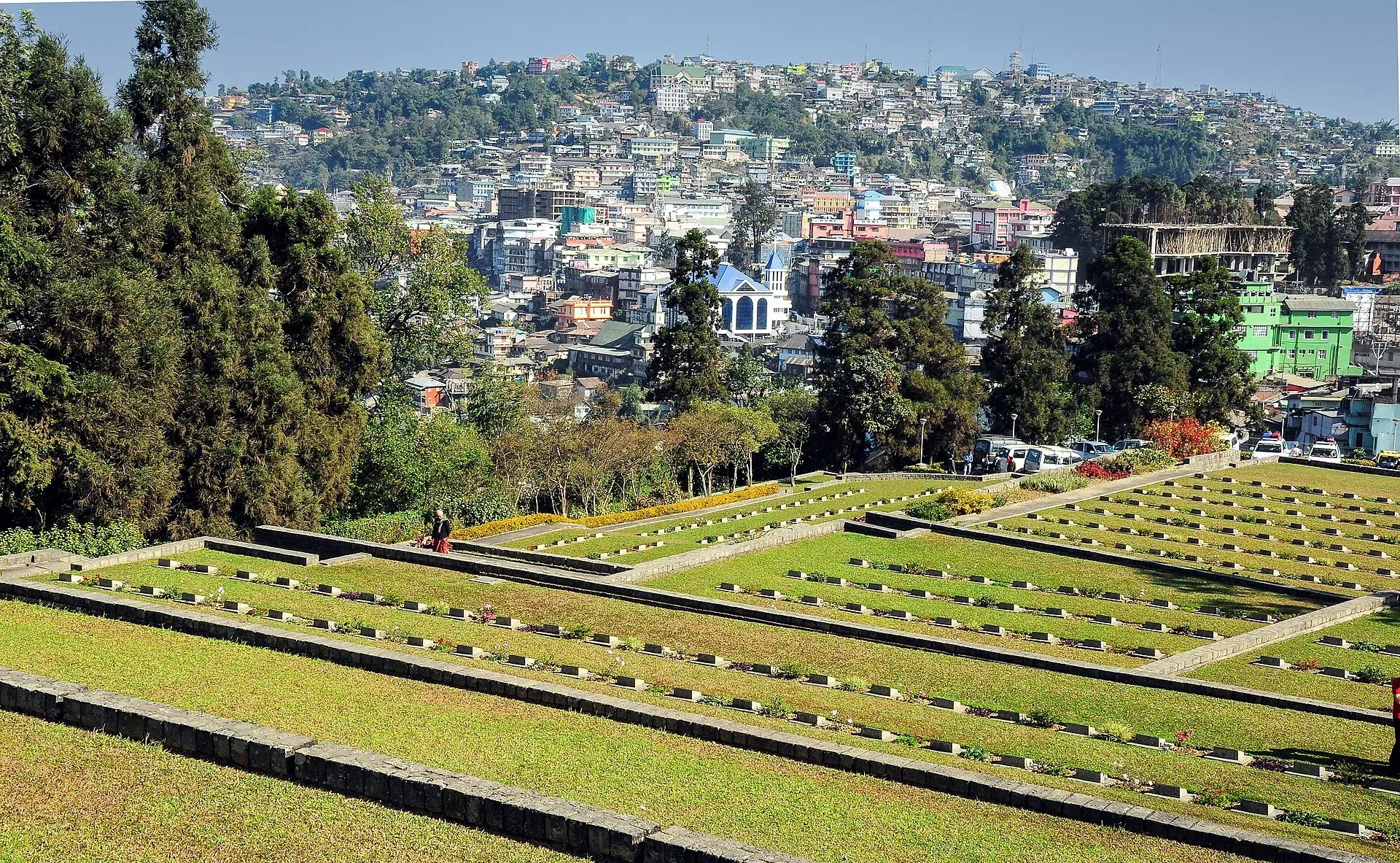
In 1944, Kohima became the site of a major battle between Allied and Japanese forces during the Burma campaign. The Kohima War Cemetery now stands on part of the battlefield and remains one of the city's most important historical sites.
Festivals
Nagaland is often called the Land of Festivals, and the description makes sense.
Different communities celebrate their own agricultural, seasonal and cultural festivals throughout the year. This means the best festival to experience depends on where in Nagaland you plan to travel.
| Festival | Usual timing | Community / region | What it represents |
|---|---|---|---|
| Sekrenyi | February | Angami / Kohima region | Purification, renewal and community wellbeing |
| Aoleang | Early April | Konyak / Mon | Spring, the new agricultural year and hopes for a good harvest |
| Moatsu | Early May | Ao / Mokokchung | Completion of sowing, community bonding and celebration |
| Tuluni | July | Sumi / Zünheboto | Agricultural abundance, fellowship and community life |
| Tsüngremong | August | Ao / Mokokchung | Thanksgiving associated with the agricultural season |
| Tokhü Emong | November | Lotha / Wokha | Post-harvest thanksgiving and community celebration |
| Hornbill Festival | 1–10 December | Statewide / Kisama | A showcase bringing cultural traditions from across Nagaland together |
Festivals take place throughout the year, so it is worth checking the calendar for the region you plan to visit.
Sekrenyi is one of the important festivals of the Angami community and is observed in February.
The festival includes ideas of purification, renewal, health and community wellbeing, with different rituals historically taking place across several days.
For travellers already planning Kohima and nearby Angami villages, February offers the opportunity to experience the region outside the much busier Hornbill season.
In Mon district, the Konyak community celebrates Aoleang in early April.
The festival marks the transition into a new agricultural year and the arrival of spring. Preparations, feasting, traditional dress, song and dance unfold across several days, with different stages of the festival carrying their own significance.
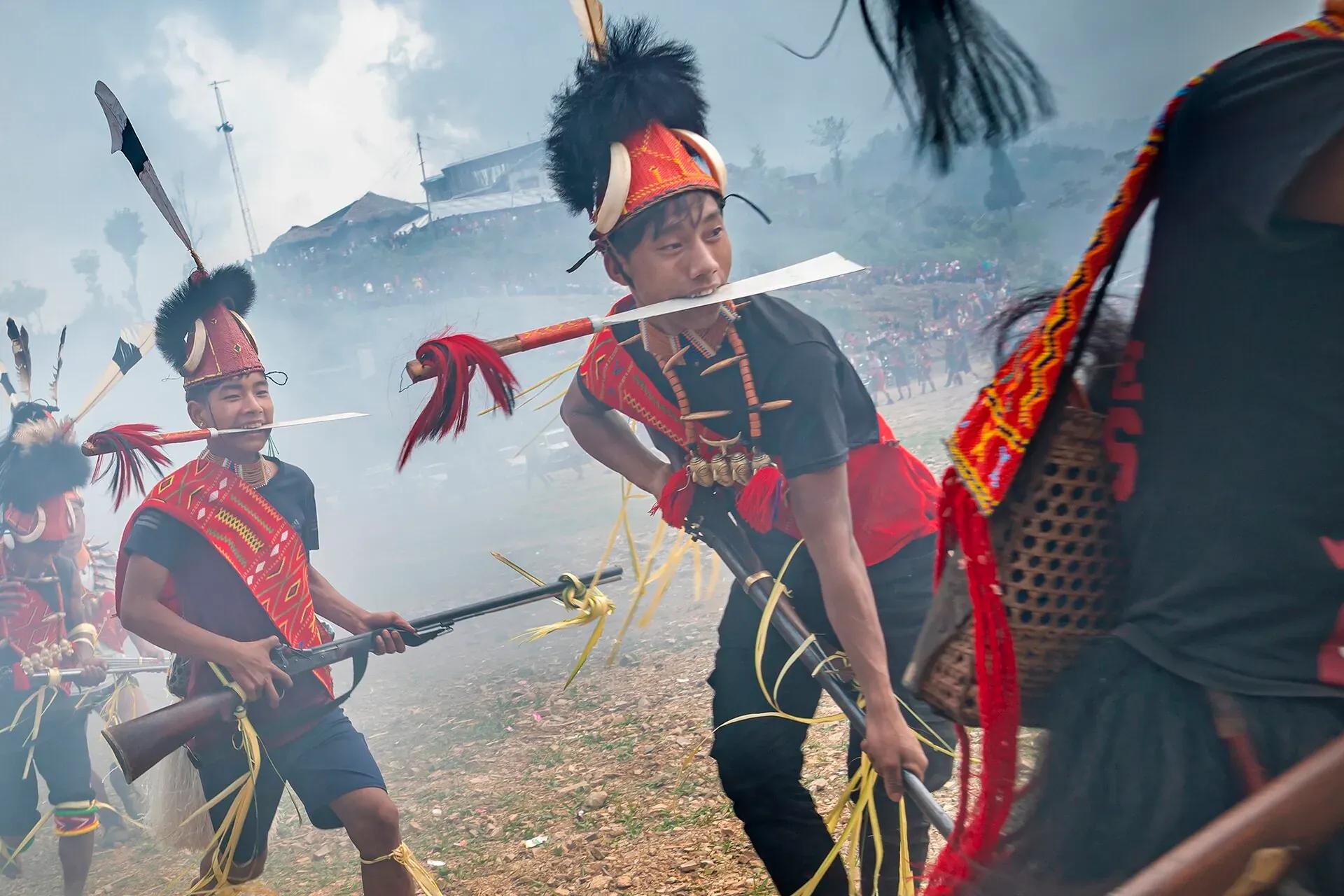
Travelling to Mon during Aoleang provides a far deeper encounter with Konyak culture than seeing a short performance elsewhere.
Among the Ao community, Moatsu follows the completion of sowing and is celebrated at the beginning of May.
Community feasts, songs, traditional games and cultural performances provide an opportunity to rest after agricultural work and strengthen social ties.
Mokokchung and surrounding Ao villages are particularly rewarding at this time.
The Lotha community celebrates Tokhü Emong after the harvest, usually in November.
The festival centres on thanksgiving, hospitality, food and renewed community relationships.
Travellers exploring Wokha and the surrounding Lotha region during this period may experience a side of Nagaland that is very different from Kohima's December festival atmosphere.
December
No introduction to Nagaland is complete without Hornbill.
Held annually from 1 to 10 December at Kisama Heritage Village near Kohima, the Hornbill Festival brings together cultural troupes, crafts, food, music and traditions from across the state. It was conceived in 2000 as a platform to present Nagaland's cultural diversity in one place.
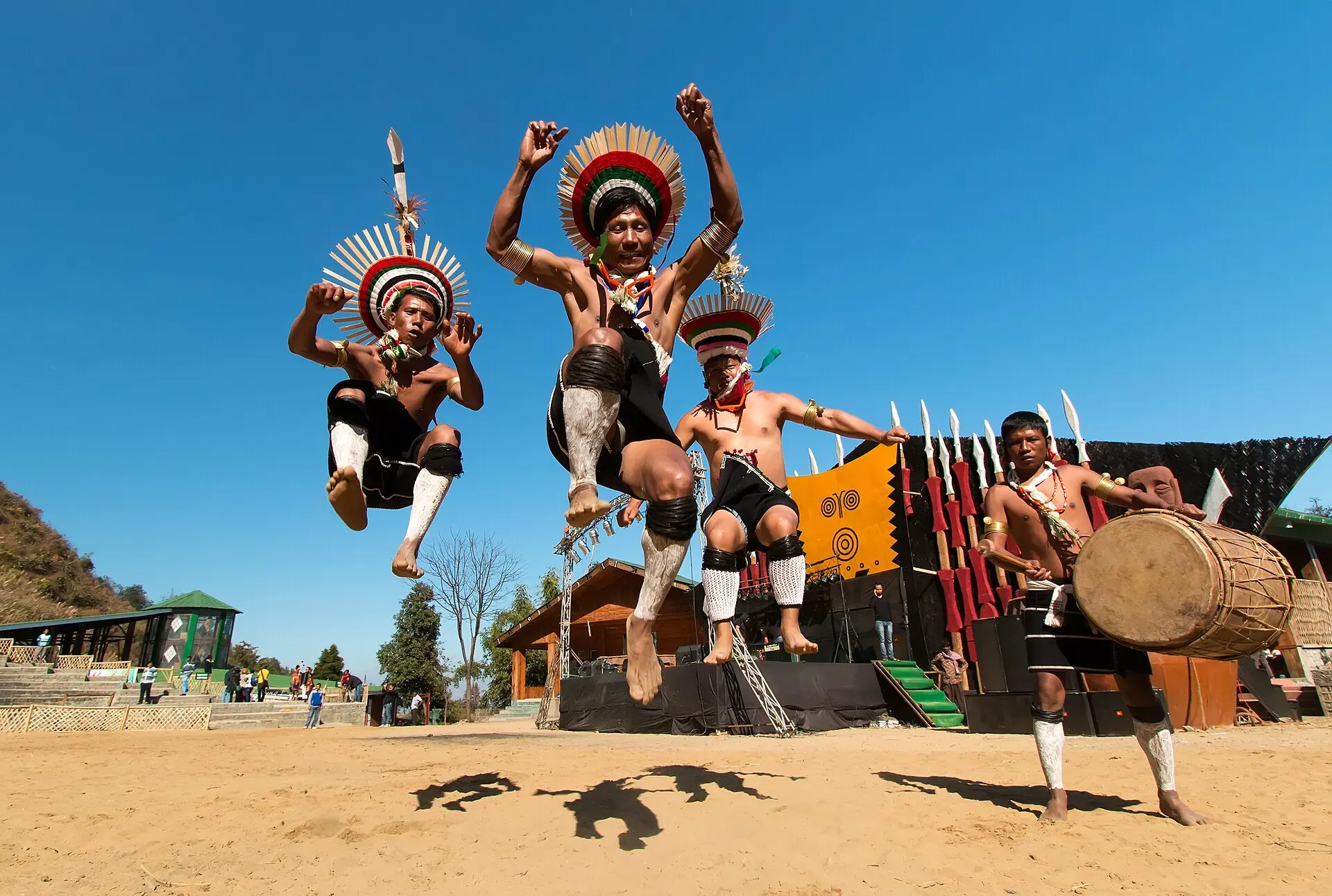
During the day, visitors can experience traditional dances, songs, indigenous games, crafts and food. The festival also incorporates contemporary music, art, fashion, literature and other cultural programmes.
Kisama itself contains structures inspired by the traditional morungs of different Naga communities, allowing visitors to see architectural and decorative distinctions within one complex.
Hornbill is an excellent introduction to Nagaland.
But it should be treated as exactly that: an introduction.
If time allows, continue beyond Kisama into Khonoma, Mokokchung, Mon, Wokha or other cultural regions. Seeing a community perform for twenty minutes on a festival stage is very different from spending time in the landscape where its traditions developed.
Music
Music has long been a way of carrying memory in Nagaland.
Traditional songs may recount agricultural work, village histories, relationships, conflict, celebration or the deeds of earlier generations. Group singing and rhythmic movement remain central to many community festivals.
Traditional dances differ between communities and often appear during festivals, feasts and ceremonial occasions.
At the same time, contemporary music is one of the most visible aspects of modern Nagaland.
Gospel, rock, folk fusion, pop and independent music have developed enthusiastic audiences, particularly among younger generations. Hornbill's evening music programmes reveal this contemporary side of the state just as clearly as its daytime cultural performances reveal older traditions.
The two should not be treated as opposites.
Modern Naga musicians, designers and artists frequently draw from inherited identity while expressing it in completely new forms.
Textiles
Textiles are among the most recognisable expressions of Nagaland's cultural heritage.
Yet there is no single traditional "Naga shawl."
Colours, motifs, weaving patterns and garment styles differ between communities, and historically some designs could communicate information about identity, social standing, achievement or occasion.
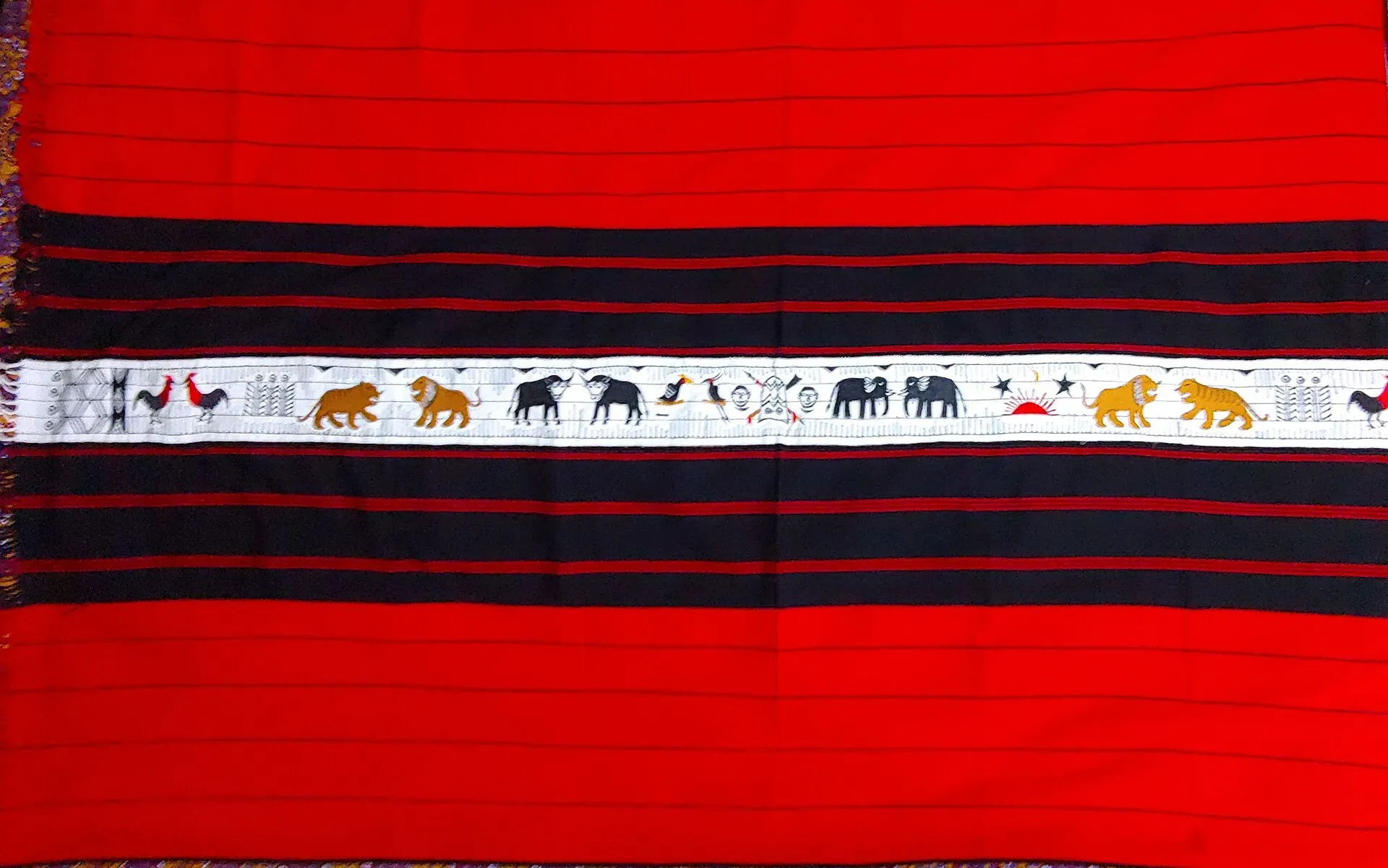
Women have traditionally played a major role in weaving, producing shawls, wraparound garments, bags and other textiles on simple looms. Around Mokokchung, Ao weaving remains an important part of the region's craft identity.
The Chakhesang shawl tradition is another notable example, with handwoven textiles using cotton or nettle fibres and patterns produced through specialised weaving techniques.
For visitors, the important thing is to ask where a textile comes from rather than buying anything labelled simply as "Naga."
Knowing the community, maker and technique gives the object meaning.
Crafts
Nagaland's material culture extends well beyond weaving.
Bamboo and cane are used for baskets, mats, utensils, storage objects and traditional household tools. Woodworking traditions include carved architectural elements, ceremonial objects and sculptures, while ornaments may incorporate beads, metal, horn and other materials.
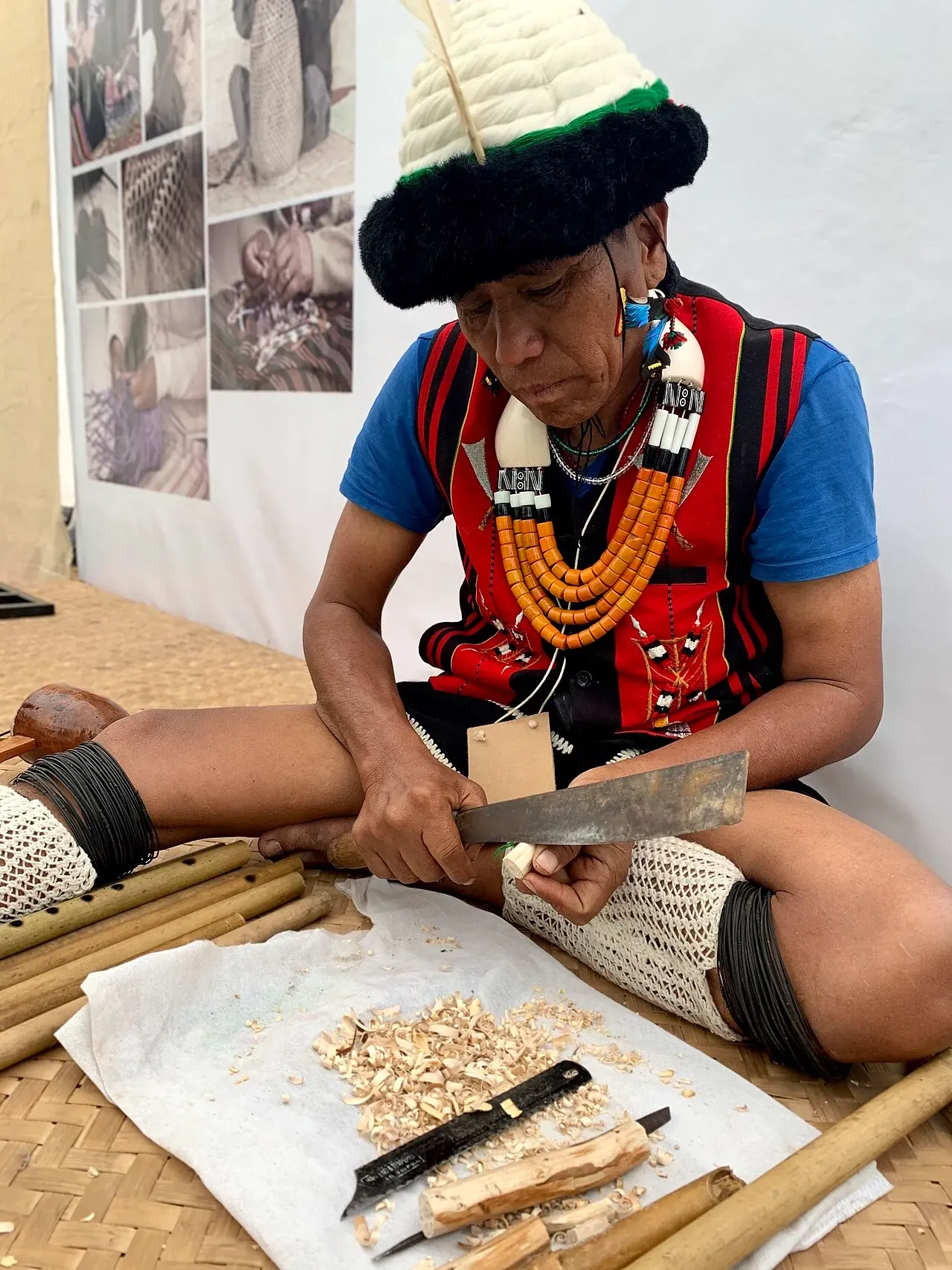
Historically, many objects carried meanings linked to community identity, age, status or achievement.
Diezephe, near Dimapur, is particularly associated with craft and village tourism, while markets and artisan centres in Kohima and Mokokchung provide opportunities to find locally made textiles and objects.
Traditional craftsmanship is also visible during Hornbill, where handloom and handicraft exhibitions bring makers from different parts of the state together.
Cuisine
Like its textiles and festivals, Nagaland's food changes from one community to another.
Rice is the principal staple, accompanied by vegetables, smoked or dried meats, fish, fermented ingredients, bamboo shoots, wild greens and chillies.
Cooking often allows the character of the ingredients to remain strong. Smoking, drying and fermentation are particularly important techniques, developed partly as ways of preserving food and building flavour.
Every tribe, village and household contributes its own food traditions.
The dish most associated with Nagaland outside the state is smoked pork with axone.
Axone, also written akhuni, is fermented soybean with an intense aroma and deep savoury flavour. It can be cooked with pork, beef, vegetables or fish and is used differently between households and communities.
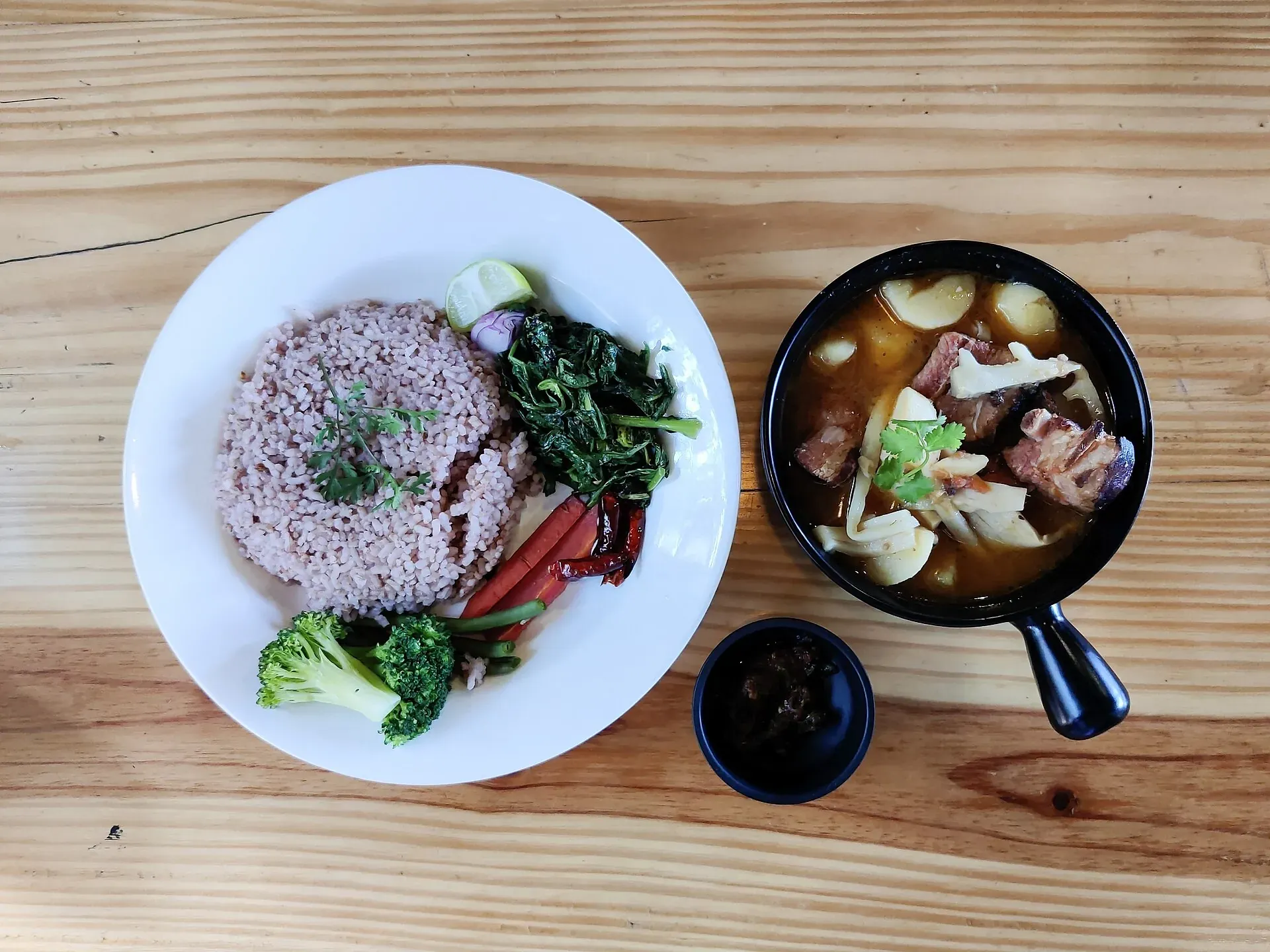
Bamboo shoot is another essential ingredient in many kitchens.
Fresh or fermented bamboo shoot is frequently cooked with smoked pork, producing a combination of sourness, smokiness and richness.
The exact preparation varies considerably, which means versions eaten in Kohima, Mokokchung and elsewhere may taste quite different.
Anishi is particularly associated with Ao food traditions.
It is made using processed and dried colocasia leaves and can be cooked with meat or used to deepen the flavour of other preparations.
Visitors interested in Ao cuisine are more likely to encounter it around Mokokchung than on a generic restaurant menu elsewhere.
Galho is a comforting rice preparation cooked together with vegetables and sometimes meat or smoked pork.
Its consistency sits somewhere between a rice dish and a thick stew, making it particularly satisfying in Nagaland's cooler hill climate.
Associated with Ao cuisine, amrusu combines ground rice, chicken and bamboo shoot.
As with many traditional recipes, household versions differ, but the dish demonstrates how grain, meat and locally available plants are combined within one preparation.
Wild and cultivated greens remain important across Nagaland.
Mustard leaves, colocasia, herbs, beans and seasonal forest produce frequently accompany meat and rice.
This part of the cuisine is easy to overlook if visitors focus only on smoked pork.
Nagaland is closely associated with the extremely hot Naga king chilli, also known locally by names including raja mircha.
It appears in chutneys and many local preparations, and it is used for flavour as well as heat.
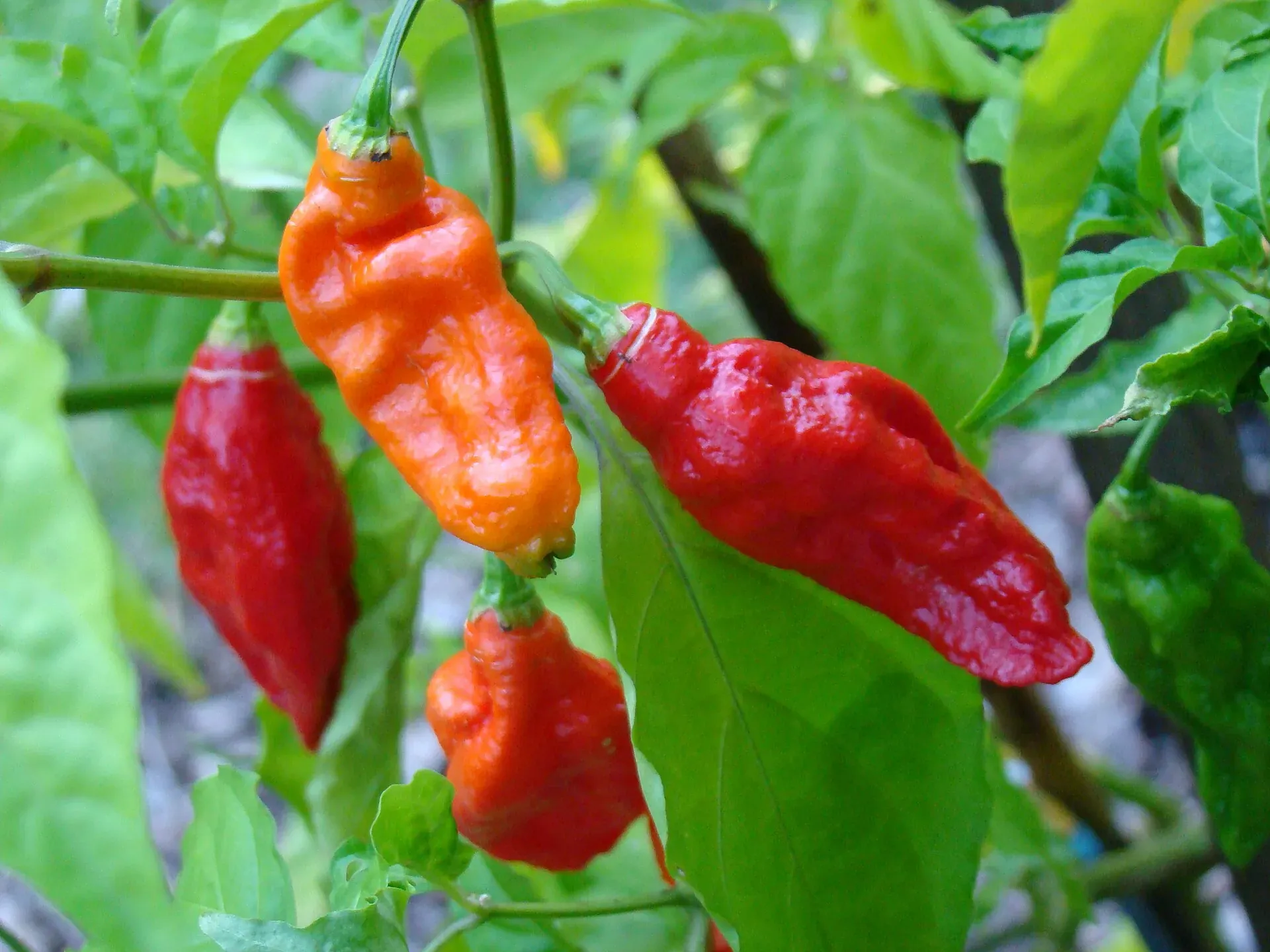
Approach it with some caution if you are unfamiliar with very hot chillies.
The best way to understand Naga food is to eat across different regions. A meal in an Ao household around Mokokchung should not taste exactly like one in an Angami village near Kohima.
Places
Kohima is the most practical introduction to Nagaland.
The Nagaland State Museum provides useful context through traditional clothing, artefacts and objects from communities across the state. From there, local markets, neighbourhoods and villages around the capital make the cultural distinctions easier to recognise.
The city also carries an important Second World War history.
At the Kohima War Cemetery, maintained on Garrison Hill, visitors can reflect on the Battle of Kohima of 1944 and its place in the wider Burma campaign.
Around 12 kilometres from Kohima, Kisama is best known as the home of the Hornbill Festival.
The complex brings architectural references from different Naga communities together and becomes the centre of Nagaland's tourism calendar every December.
Visit during Hornbill for the full experience, but combine Kisama with actual villages rather than allowing it to stand in for the whole state.
Around 20 kilometres from Kohima, Khonoma offers one of Nagaland's strongest combinations of history, landscape and community life.
The Angami village is remembered for resistance to British expansion and is also known for community-led conservation. The Khonoma Nature Conservation and Tragopan Sanctuary was established in 1998 to protect wildlife including the Blyth's tragopan.
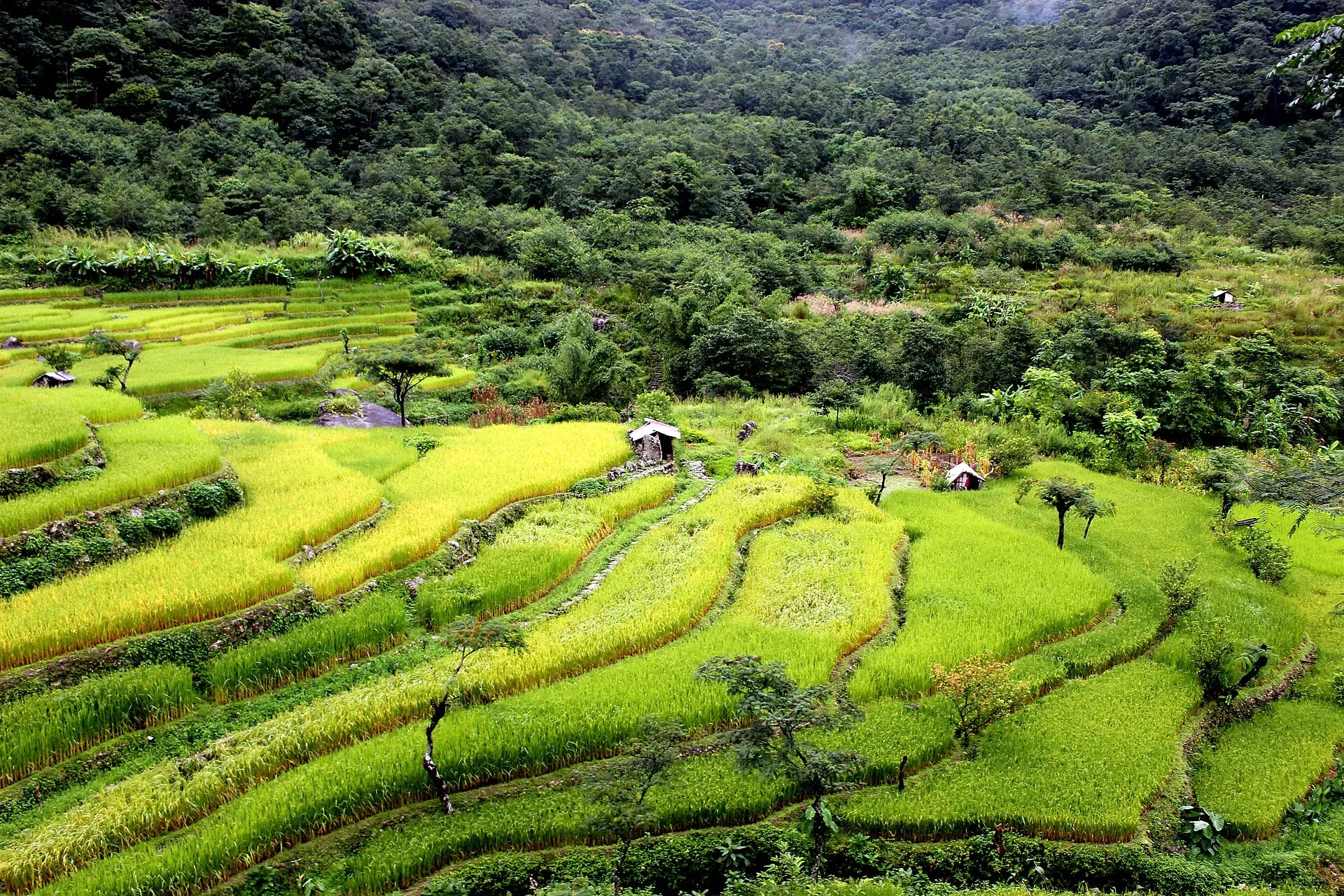
Terraced fields extend below the village while narrow lanes, traditional structures and surrounding forest make Khonoma worth a slow visit rather than a brief photo stop.
The Dzükou Valley, near the Nagaland–Manipur boundary, is one of the state's best-known trekking landscapes.
Rolling grasslands, seasonal flowers and forested ridges create a landscape unlike the villages and towns elsewhere in the state.
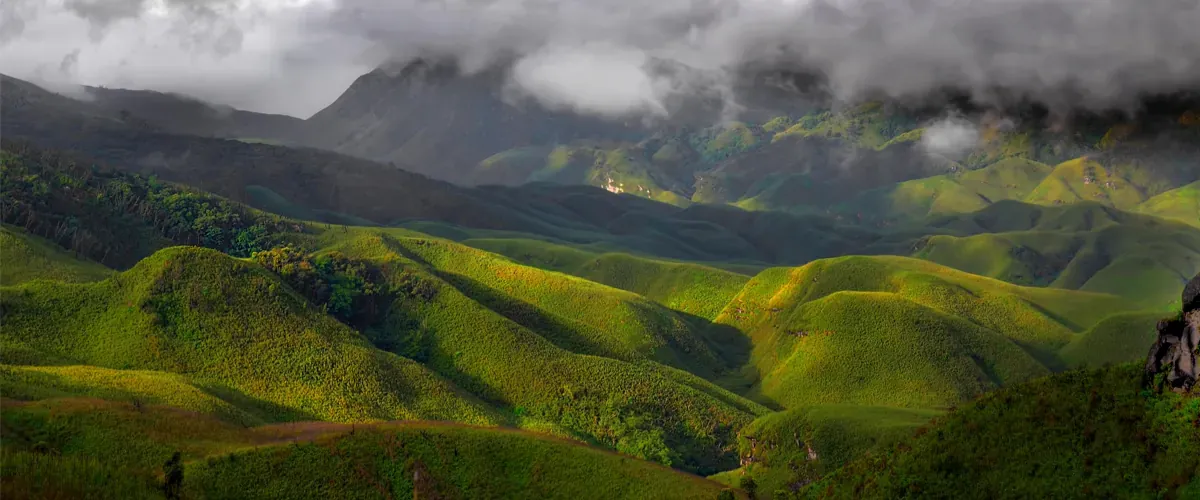
Although primarily a nature experience, Dzükou works naturally with a Kohima and Khonoma itinerary.
Conditions change considerably with the season, so trekking plans should account for rain, trail conditions and local guidance.
Mokokchung deserves more attention than it usually receives.
The town is an important centre of Ao cultural life, surrounded by villages with distinct histories and traditions. Nearby Ungma, Longkhum, Mopungchuket and Chuchuyimlang provide opportunities to move beyond the town and experience rural landscapes, churches, museums, village spaces and local food.
Visit in early May for Moatsu or in August for Tsüngremong if festival timing fits the journey.
Northern Nagaland feels very different from Kohima.
Mon district is strongly associated with the Konyak community and a cultural landscape extending towards the Myanmar border.
Villages such as Longwa, Shangnyu and Chui are known for their architecture, community traditions, ceremonial objects and histories connected with an earlier era of warfare and headhunting.
This history is often sensationalised in tourism material. A better approach is to meet people as members of living contemporary communities rather than treating the region as a relic of the past.
If possible, visit during Aoleang in April and allow several days for the journey.
Wokha is associated principally with the Lotha community and provides another reason to travel beyond the standard Kohima circuit.
The wider district includes mountain landscapes, villages and the Doyang reservoir area.
During the autumn migration period, the Doyang landscape is also known for gatherings of Amur falcons, adding a remarkable seasonal wildlife experience to a cultural journey through the region.
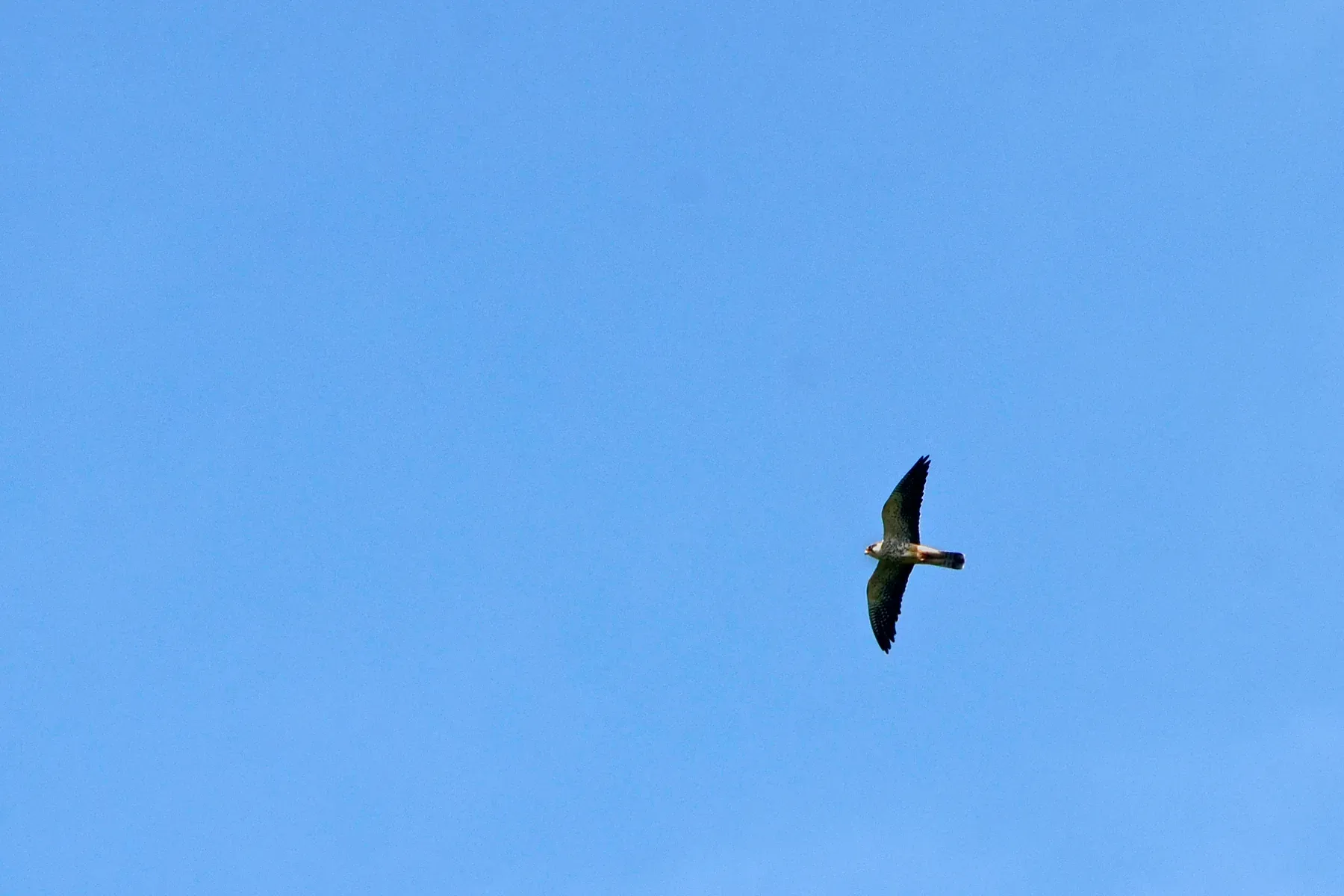
November can combine this with Tokhü Emong celebrations.
Planning
For most first-time journeys, October to May offers the most comfortable conditions.
The monsoon months bring intense greenery but can make mountain roads, trekking and longer rural journeys more difficult.
For trekking, village visits and road travel, the post-monsoon and winter months are usually the easiest.
For festivals, choose the region first and then plan around that community's calendar rather than assuming December is the only time to visit Nagaland.
Getting there
For many visitors, Nagaland is reached through Dimapur, the state's principal transport gateway.
Dimapur Railway Station provides one of the easiest ways to enter Nagaland and is well connected with Guwahati. For travellers combining Assam and Nagaland, the Guwahati–Dimapur rail journey fits naturally into a broader Northeast itinerary, and Kohima is reached by road from there.
Dimapur Airport is the main airport serving Nagaland. Travellers who cannot find a convenient direct flight often connect through Guwahati before continuing to Dimapur.
Nagaland can also be approached by road from Assam. From Dimapur, routes continue towards Kohima and onward into the other districts. Mountain travel takes longer than distances on a map may suggest, particularly when travelling towards Mokokchung, Mon, Tuensang or other eastern and northern areas. Avoid trying to base an entire Nagaland itinerary in Kohima — the state's cultural diversity only becomes clear when you spend time in different regions.
Indian citizens from outside Nagaland require an Inner Line Permit, or ILP. Nagaland's ILP system is handled online, including the tourist category. The official portal also sets out separate requirements for foreign visitors, including passport and visa or Protected Area Permit documentation. Permit rules can change, so check the official Nagaland ILP portal before travelling.
Before the hills
Many Nagaland journeys begin with the train to Dimapur, and Guwahati is where that journey starts.
If you are combining Assam and Nagaland, or connecting through Guwahati on the way to Dimapur, an evening in the city sits naturally at the beginning of the trip.
An Alfresco Grand cruise is an easy way to spend it.
The Sunset Cruise departs at 5:30 PM and returns by 6:30 PM, which works well before an early train. The Dinner Cruise departs at 7:30 PM and runs until 9:00 PM, with a buffet dinner and live Bihu, Sattriya and Gayan Bayan performances on deck. Both sail from the Guwahati riverfront, about half an hour from most city hotels — the boarding point moves with the river's seasons, and your exact point is printed on your boarding pass.
The next day, the journey continues towards Dimapur and the hills beyond.
An evening on the Brahmaputra before travelling into the Naga Hills.
Good to know
Nagaland is known for its diverse Naga communities, village traditions, colourful textiles, agricultural festivals, distinctive cuisine, the Hornbill Festival, mountain landscapes and contemporary music culture.
The Hornbill Festival is held every year from 1 to 10 December at Kisama Heritage Village near Kohima. It brings together cultural performances, food, crafts, music and traditions from communities across Nagaland.
No. Festivals take place throughout the year. February is associated with Sekrenyi, April with Aoleang, May with Moatsu, August with Tsüngremong and November with Tokhü Emong, among many others.
Good starting points include smoked pork with axone, pork with bamboo shoot, anishi, galho, amrusu, local greens and dishes made with fermented soybean and seasonal ingredients.
For a first journey, combine Kohima with Kisama, Khonoma and Dzükou Valley. With more time, continue to Mokokchung and its Ao villages, Mon and the Konyak region, or Wokha and Doyang.
October to May generally offers the most comfortable weather for a broad itinerary. December is the busiest month because of Hornbill, while April, May and November are excellent alternatives for travellers interested in community-specific festivals.
Yes. Indian citizens from outside Nagaland require an Inner Line Permit. Applications are available through the Government of Nagaland's online ILP system.
Yes. Guwahati has strong air and rail connections and is useful for travellers continuing to Dimapur, the main transport gateway into Nagaland. Travellers who can fly directly to Dimapur may not need to route through Guwahati.