Heritage · Tripura
Heritage · Tripura
Abhijit1989, CC BY-SA 4.0, via Wikimedia Commons
Tripura carries its history in very different forms.
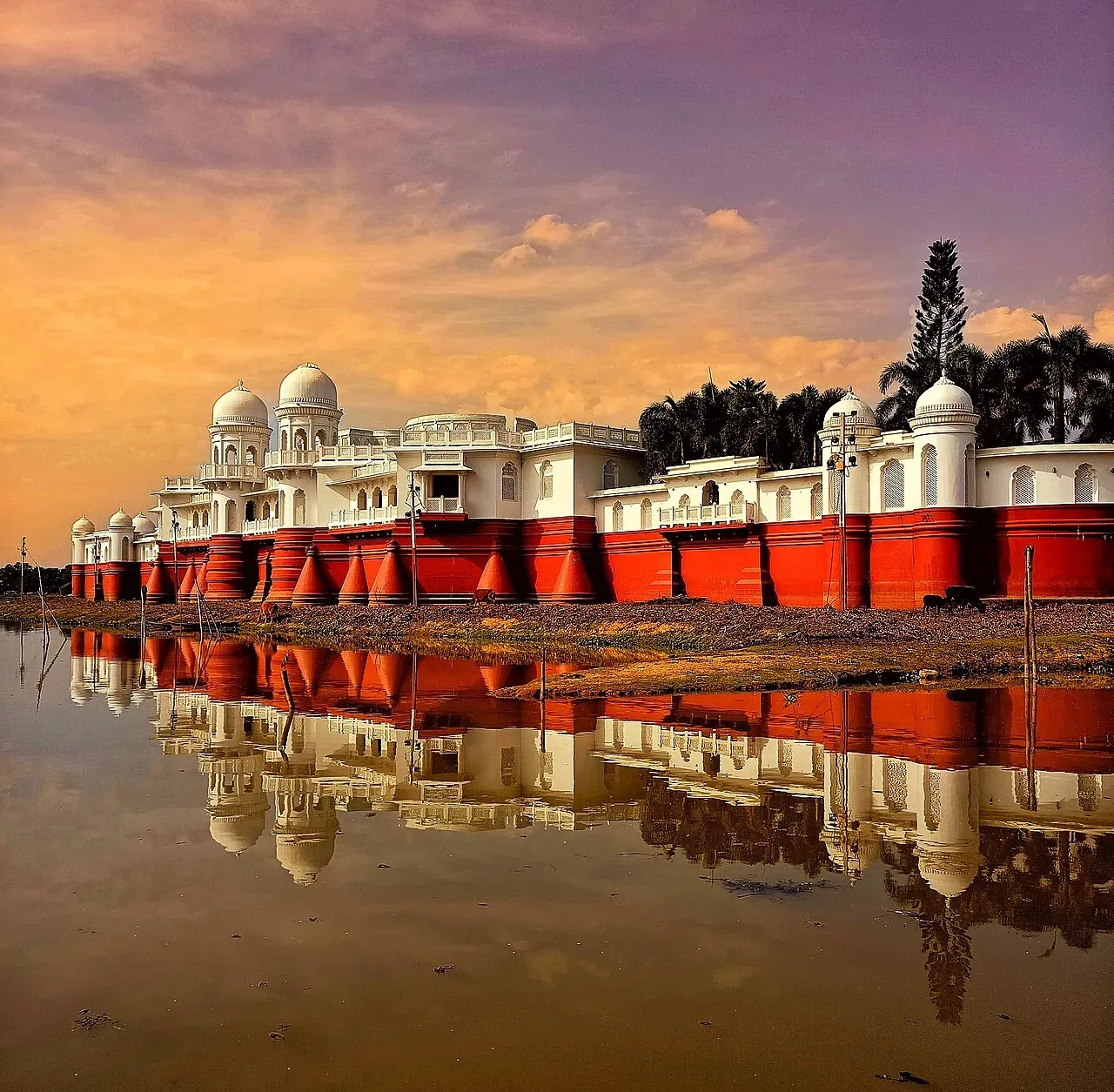
In Agartala, white domes and formal gardens recall the era of the Manikya kings. At Neermahal, a royal palace rises from the waters of Rudrasagar Lake. Farther north, enormous faces and figures emerge directly from the forested rock at Unakoti, while along the Gomati River, carvings appear almost unexpectedly on the cliffs of Chabimura.
But Tripura's heritage is not limited to royal buildings and archaeological sites.
The state is home to 19 Scheduled Tribe communities, including Tripuri, Reang or Bru, Jamatia, Noatia, Halam, Chakma and others, alongside a large Bengali-speaking population. This meeting of Indigenous and Bengali cultural worlds has shaped the state's languages, festivals, religious traditions, music, textiles and food.
Handwoven risa and rignai remain symbols of identity. Garia and Kharchi connect contemporary celebrations with older belief systems. Hojagiri balances movement with remarkable control, while kitchens make use of bamboo shoots, fermented fish, herbs and ingredients that distinguish Tripuri food from the Bengali cuisine also widely eaten across the state.
Tripura may be one of Northeast India's smaller states, but culturally it contains many layers.
History
For centuries, Tripura was ruled by the Manikya dynasty, whose kingdom extended at different times beyond the boundaries of the modern state.
The Rajmala, the royal chronicle of Tripura, preserves the genealogy and stories of its rulers, while temples, palaces and archaeological remains across the state reflect different periods of royal patronage.
Over time, the kingdom developed close political, economic and cultural relationships with the Bengal plains. These connections helped shape architecture, language, religion and court culture while Indigenous communities of the hills maintained their own customs and social traditions.
The royal capital shifted between different locations before Agartala emerged as the modern centre of administration.
Following Indian independence, the princely state merged with the Indian Union on 15 October 1949. Tripura later became a Union Territory and attained full statehood on 21 January 1972.
This history explains much of modern Tripura. Royal, Indigenous and Bengali influences do not exist in separate compartments; they continually overlap.
Festivals
Tripura's festival calendar is equally varied.
Some festivals are rooted in Indigenous agricultural and religious traditions, while others reflect the state's long association with Hindu worship and Bengali cultural life.
| Festival | Usual timing | Community / region | What it represents |
|---|---|---|---|
| Garia Puja | Third week of April | Indigenous communities across Tripura | Agriculture, livestock, prosperity and wellbeing |
| Kharchi Puja | June or July | Old Agartala | Worship of the Fourteen Deities |
| Ker Puja | Usually July, after Kharchi | Traditional Indigenous and royal religious practice | Protection and community wellbeing |
| Hojagiri Festival | Usually October | Reang / Bru community | Celebration of Hojagiri dance and cultural traditions |
| Durga Puja | September or October | Statewide | Major religious and social celebration |
| Diwali Mela at Tripura Sundari Temple | October or November | Udaipur / Matabari | Pilgrimage, worship and annual fair |
Exact dates can vary with traditional calendars, so travellers should confirm the schedule for the year of travel.
Garia Puja is one of Tripura's most important Indigenous festivals.
Celebrated on the seventh day of the Bengali month of Baisakh, usually in the third week of April, the festival centres on Garia, a deity associated with livestock, wealth and prosperity.
Agriculture lies at the heart of the celebration.
Offerings, ritual objects, music and community gatherings accompany prayers for fertility, successful cultivation and wellbeing.
For visitors, Garia Puja is a useful reminder that many of Tripura's oldest festivals developed directly from relationships between people, crops, animals and the land.
In Old Agartala, Kharchi Puja brings thousands of people to the temple of the Fourteen Deities.
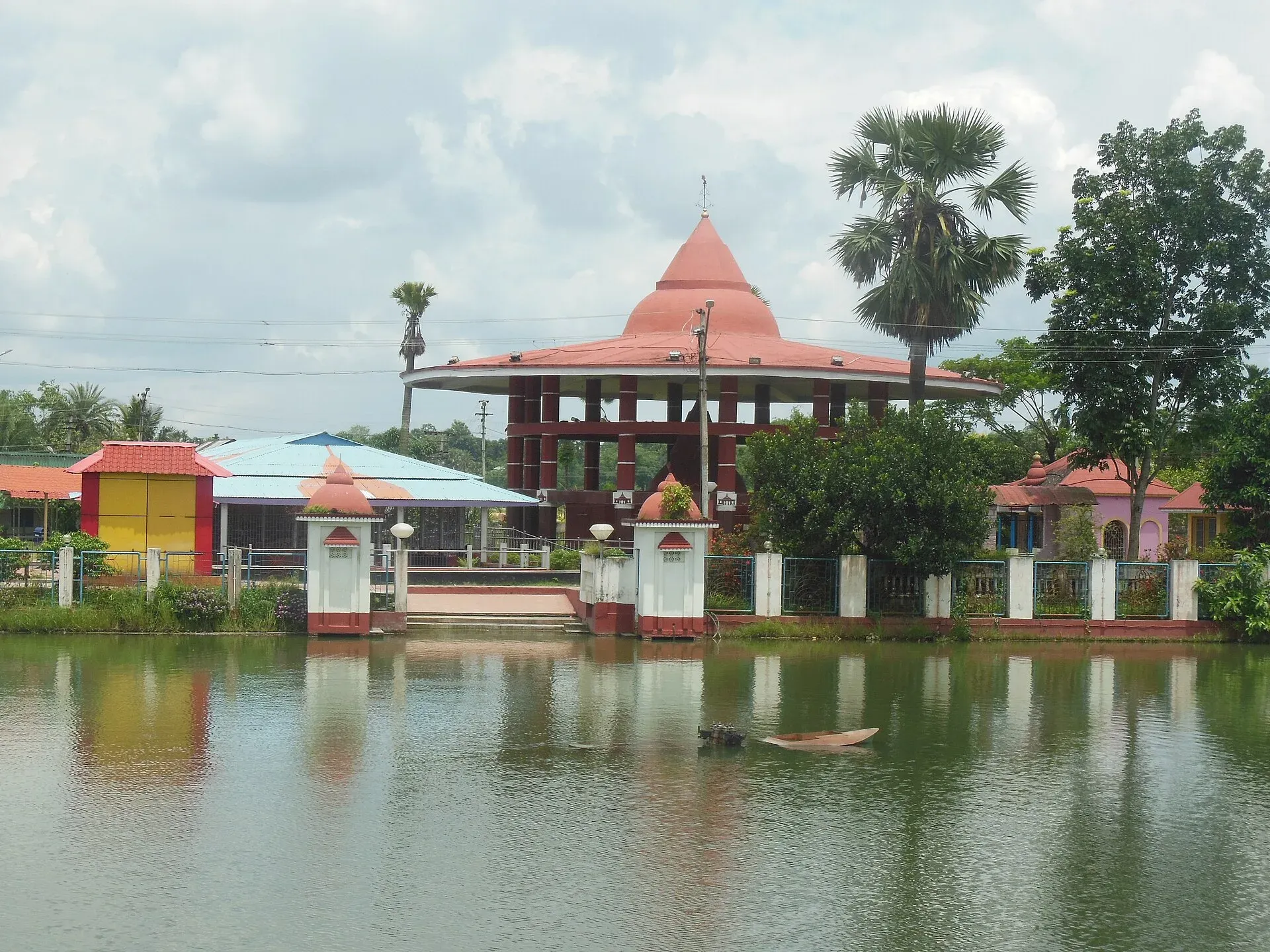
The seven-day festival generally falls in June or July and combines older Indigenous religious traditions with later Hindu influences.
The result is one of the clearest expressions of Tripura's layered cultural history.
Ker Puja traditionally follows Kharchi and is associated with protection from misfortune and the wellbeing of the community.
Its ritual structure is unusual, with traditionally defined sacred boundaries and restrictions around the area where the worship takes place.
For travellers, it is better approached as a living religious observance rather than as a public spectacle.
The Hojagiri dance is closely associated with the Reang or Bru community.
The performance is immediately recognisable for its extraordinary balance. Dancers execute controlled movements while balancing objects and keeping much of the upper body remarkably steady.
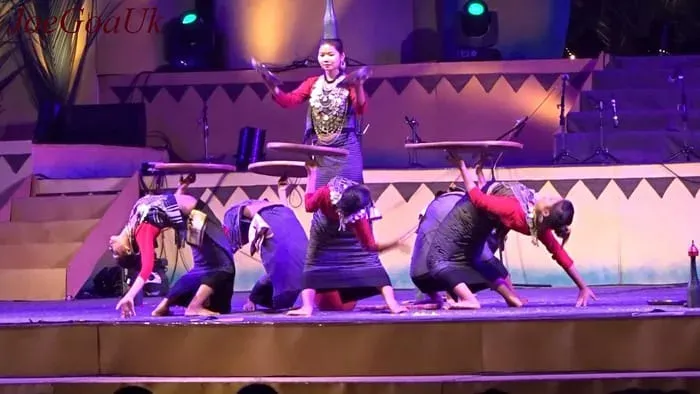
State-level Hojagiri celebrations are commonly organised during October, although exact dates vary each year.
Diwali has particular significance at Tripura Sundari Temple in Udaipur.
Each year, a large Diwali Mela takes place around the temple during October or November, attracting pilgrims and visitors from across the region.
The combination of pilgrimage, fairground activity and evening illumination makes this one of the most atmospheric times to visit southern Tripura.
Dance
Tripura's dances reflect the cultural diversity of its communities.
Among Tripuri traditions, Garia dance accompanies the spring festival, while Lebang Boomani is linked with the agricultural season.
The dance evokes the catching of colourful insects known as lebang after sowing, turning agricultural life into movement, rhythm and song.
Hojagiri, associated with the Reang or Bru community, has developed into one of the state's most recognisable performances.
Different communities contribute their own musical instruments, songs and dance traditions, which is why a single "Tripura folk dance" cannot represent the whole state.
Contemporary Bengali music, theatre and festival culture are also strongly present, particularly in Agartala.
This coexistence is central to Tripura's identity.
Textiles
Weaving is one of Tripura's strongest living craft traditions.
The state's handloom sector remains closely connected with Indigenous women and household production, with generations of weavers continuing to create textiles on traditional looms.
The risa is a relatively small handwoven cloth with considerable cultural meaning.
It may be worn as part of traditional dress, used as a head covering or upper garment, and presented to guests as a gesture of honour.
Risa holds Geographical Indication protection, recognising its connection to Tripura's Indigenous textile heritage.
For visitors, it is one of the most meaningful textiles to purchase directly from local weavers.
The rignai is traditionally wrapped around the lower body by Tripuri women, while the pachra forms another important part of women's dress.
Patterns, colours and weaving styles vary, and particular designs may carry regional or community associations.
Tripura Pachra-Rignai also holds GI recognition. Traditional pieces are commonly woven using waist or backstrap looms, preserving a technique deeply tied to household weaving.
The best way to appreciate these textiles is not simply to look at their colours, but to ask who made them and which weaving tradition they represent.
Crafts
Tripura's forests have made bamboo and cane natural materials for craft.
Artisans create baskets, mats, furniture, room dividers, wall panels, household objects and decorative pieces.
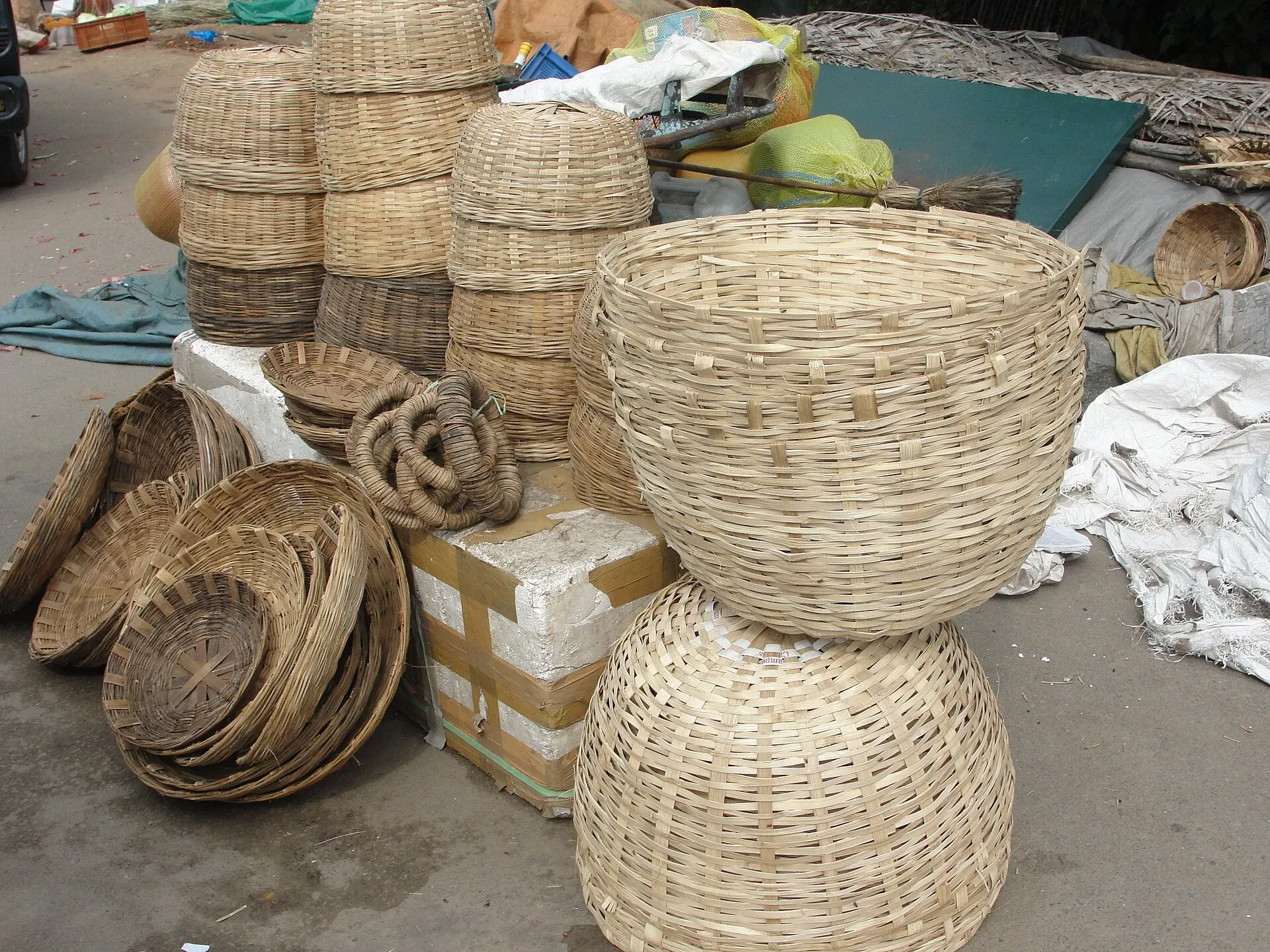
In Agartala, Purbasha, the government handicrafts emporium, is a useful place for an introduction to locally produced craft.
Village-based artisans and self-help groups, however, often provide a closer connection between the object and the person who made it.
Cuisine
Tripura's food reflects the same meeting of cultures seen elsewhere in the state.
Bengali cuisine is widely eaten, particularly in the plains and urban areas, while Indigenous Tripuri kitchens have their own ingredients and techniques.
Rice is central, accompanied by vegetables, fish, pork and other meats. Fermented fish known as berma is one of the defining flavours in several traditional preparations.
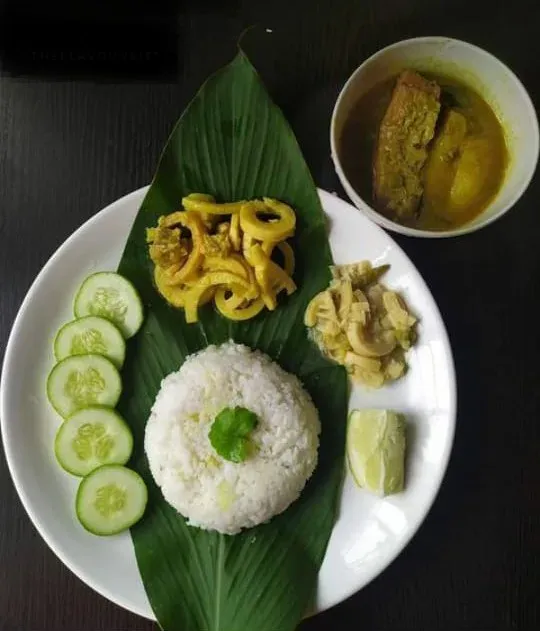
The term Mui Borok refers broadly to traditional Tripuri food.
Rather than describing one particular dish, it represents a culinary tradition based on local vegetables, bamboo shoots, fermented ingredients, meat and fish.
Its flavours are direct, earthy and savoury.
Gudok is one of the dishes most closely associated with Tripuri cuisine.
Vegetables and other ingredients are cooked together, often with berma, producing a deeply savoury preparation.
The exact combination varies by household and season, which is part of its character.
Chakhwi is another traditional preparation, generally cooked with vegetables and an alkaline ingredient.
Different versions may use bamboo shoots, jackfruit seeds, papaya or other seasonal produce.
The dish has a gentle richness that contrasts with sharper chilli-based accompaniments.
Mosdeng serma is a fiery chutney or mashed accompaniment usually made with chilli, onion and tomato, with variations incorporating fermented fish or other ingredients.
It is eaten alongside rice and other dishes rather than as a meal on its own.
Wahan mosdeng combines pork with the flavours of mosdeng, bringing together meat, chilli and aromatic ingredients.
Pork is particularly important in many Indigenous kitchens across Tripura.
Berma is dried and fermented fish used as a seasoning and flavouring ingredient.
Its aroma is strong, but its role is similar to other fermented ingredients found across Northeast and Southeast Asia: a relatively small amount adds considerable depth to a dish.
The best way to explore Tripuri food is through local restaurants, homestays and community kitchens rather than expecting every dish to appear on a standard Agartala menu.
Places
Begin in Agartala, where Tripura's royal and contemporary identities meet.
The city's most recognisable landmark is Ujjayanta Palace, the former royal palace that now houses the Tripura State Museum.
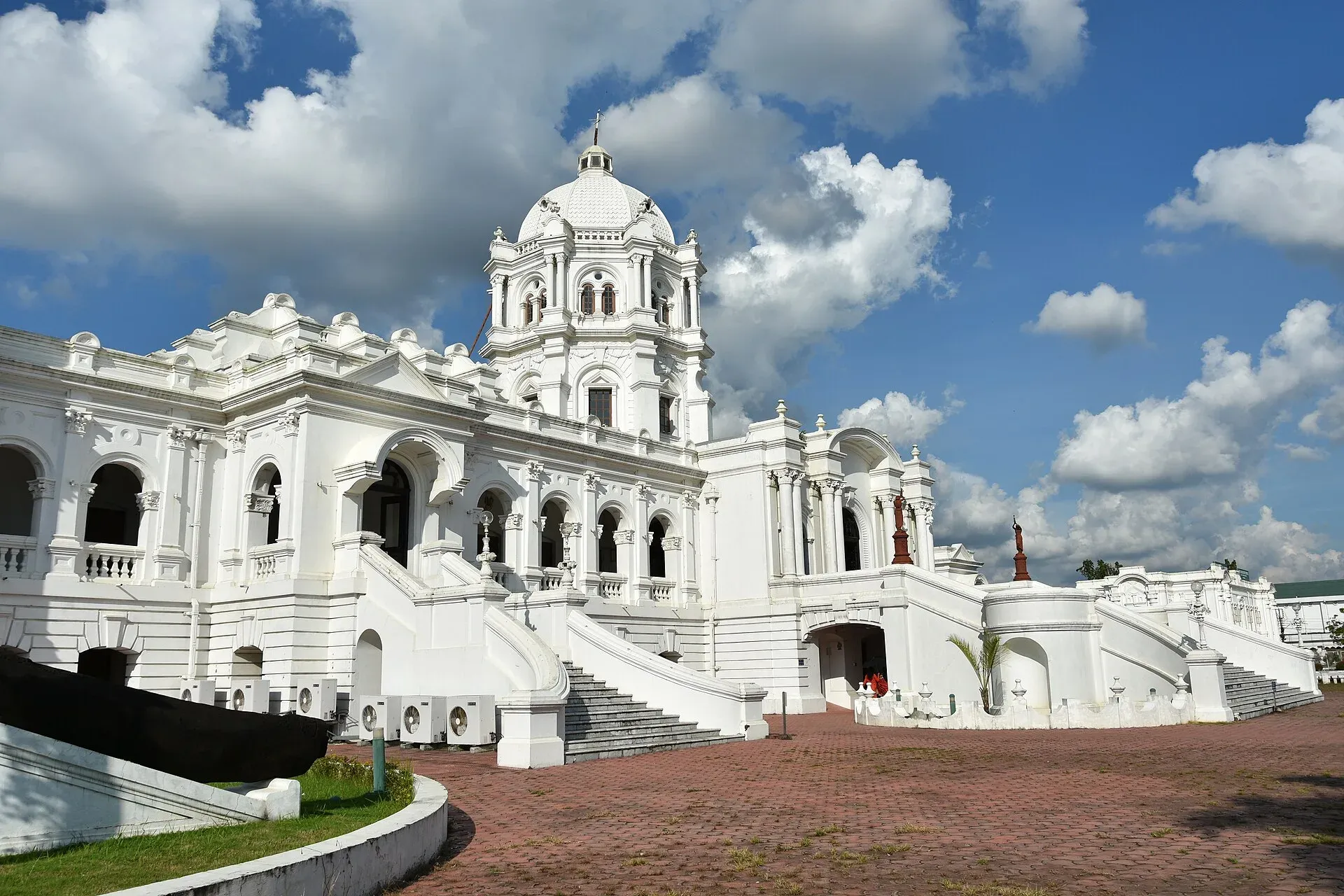
Its galleries explore royal history, the communities of Northeast India, anthropology, craft and important chapters in Tripura's modern history.
It is one of the best first stops for understanding the state before travelling farther.
Around 50 kilometres from Agartala, Neermahal rises from the middle of Rudrasagar Lake.
Built as a royal summer residence, the palace combines architectural influences and creates one of Tripura's most distinctive heritage landscapes.
Visitors reach it by boat, making the journey across the lake part of the experience.
Visit around late afternoon if possible, when the changing light gives the palace and lake a softer atmosphere.
In Udaipur, the Tripura Sundari Temple is one of the state's most important pilgrimage centres.
Founded by Maharaja Dhanya Manikya in 1501, the temple is revered as one of the Shakti Peethas.
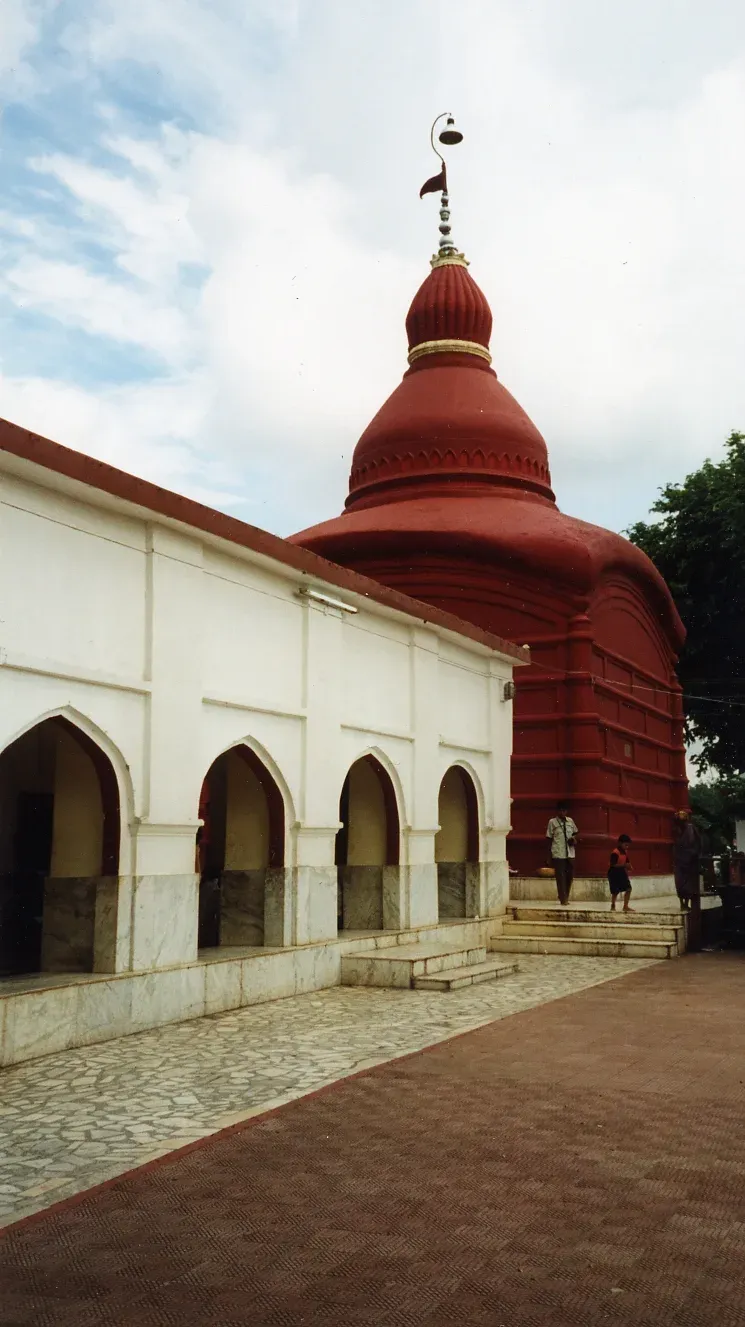
Its importance extends beyond architecture. Daily worship, pilgrimage and the annual Diwali Mela keep the site very much alive.
Unakoti is unlike anything else in Tripura.
Colossal faces and figures connected primarily with Shaivite traditions emerge from rock faces and boulders within a forested setting.
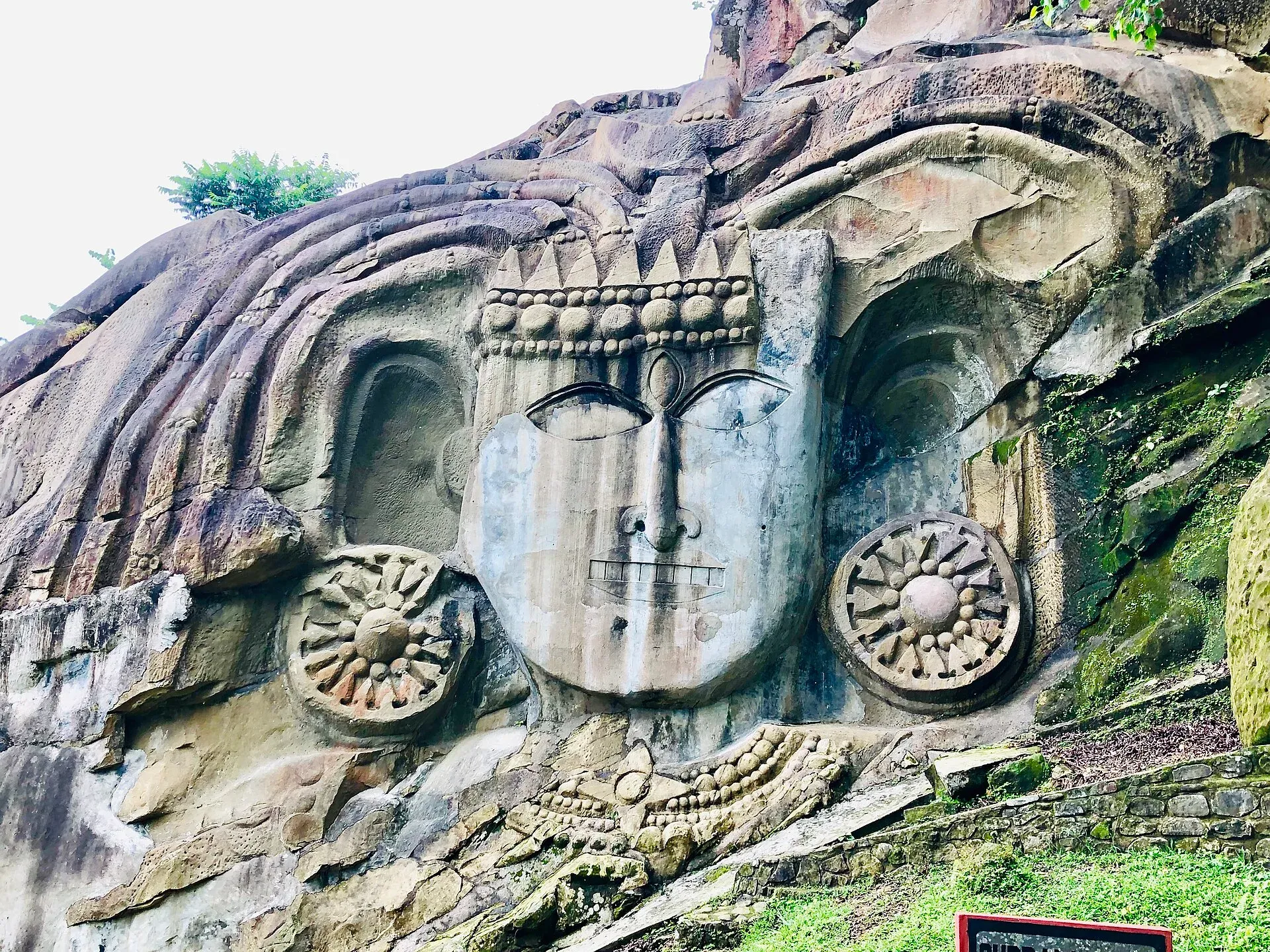
The site's name translates roughly as "one less than a crore," linked to local legends explaining the multitude of stone figures.
Rather than appearing as a carefully planned temple complex, the carvings feel embedded in the landscape itself.
It deserves an overnight journey rather than being treated as a rushed excursion from Agartala.
At Chabimura, also known as Devtamura, large rock carvings appear on the cliffs overlooking the Gomati River.
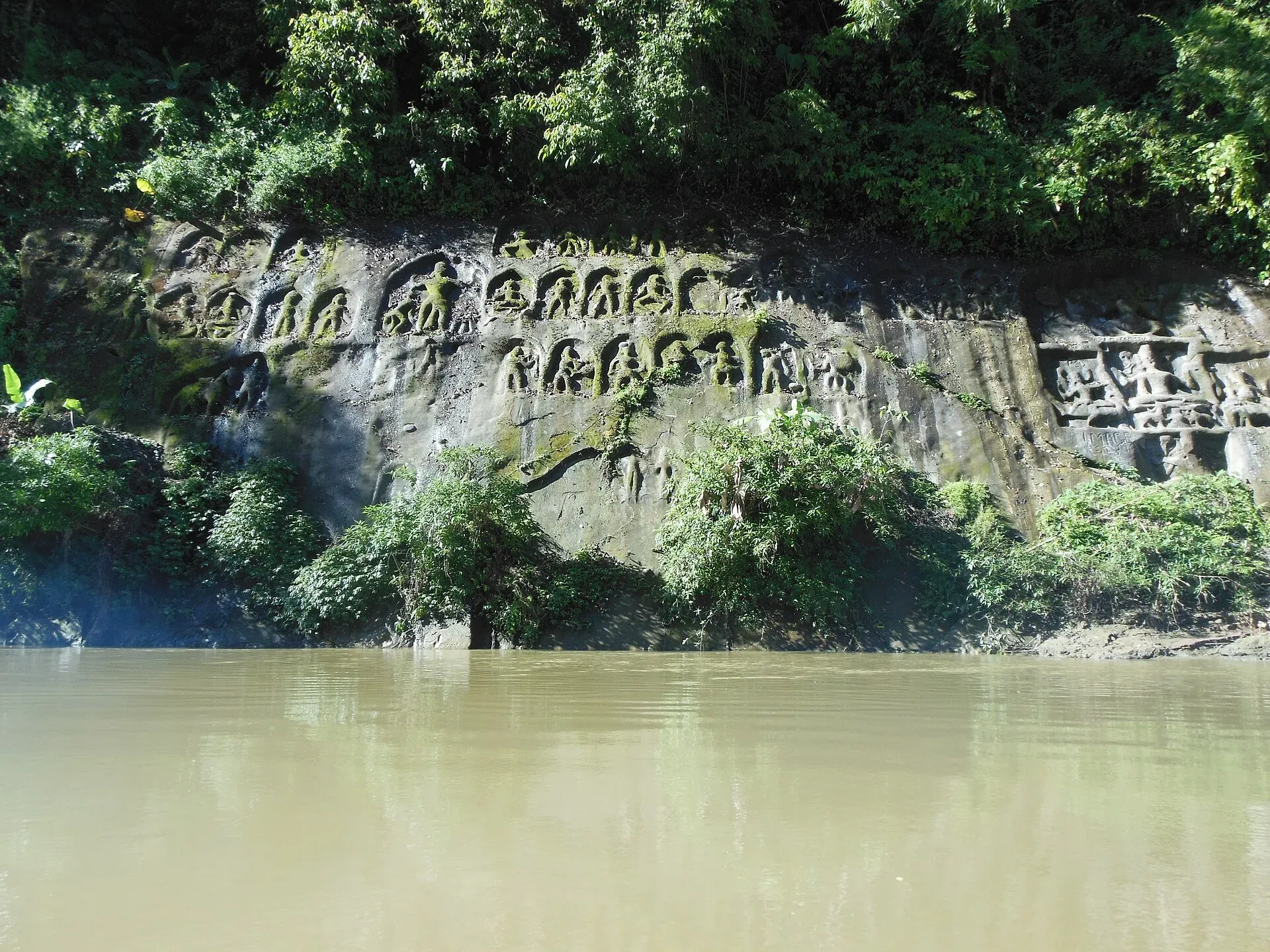
The approach by boat is part of the appeal. Forest, water and rock art come together in a way that makes the archaeological site feel inseparable from its setting.
For travellers interested in heritage, Chabimura pairs naturally with Udaipur and the wider Gomati district.
In southern Tripura, Pilak contains archaeological remains dating broadly to the eighth and ninth centuries.
The sculptures and ruins show both Hindu and Buddhist artistic influences, making Pilak particularly important for understanding the region's historical connections with Bengal and neighbouring areas.
Pilak is less dramatic than Unakoti, but historically it is just as interesting.
For a change of landscape, travel north towards the Jampui Hills, Tripura's highest hill range.
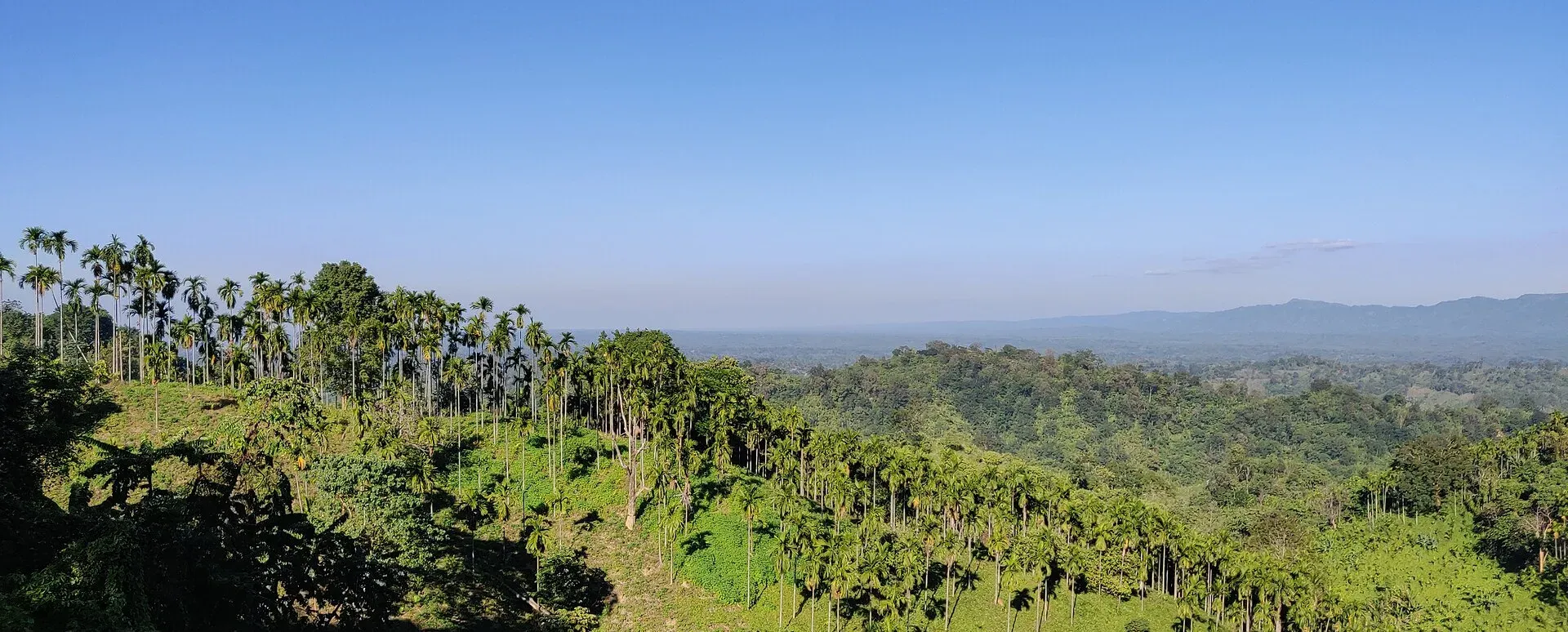
Villages, orange orchards and views across the surrounding ranges give the region a very different character from Agartala and the central plains.
The area is also culturally distinct and rewards travellers willing to spend more than one night.
In eastern Tripura, Dumboor Lake spreads between forested hills and islands.
The landscape is primarily a nature experience, but it fits naturally into a longer journey through rural Tripura and the Gomati basin.
Planning
For most travellers, October to March is the easiest period for exploring Tripura.
Temperatures are generally more comfortable, humidity is lower and road journeys are easier than during the monsoon.
Getting there
Tripura is comparatively easy to enter by air and rail, with Agartala serving as the principal gateway.
Maharaja Bir Bikram Airport in Agartala is the main airport serving the state.
It has domestic connections with several regional and national cities. For a standalone Tripura itinerary, flying directly to Agartala is generally the simplest approach.
Always check current flight schedules before booking.
Agartala is well connected to India's broad-gauge network, and the Guwahati–Agartala route is served by around ten direct trains including the Tejas Express, Humsafar, Kanchanjunga and Tripura Sundari services.
The journey takes roughly thirteen hours over about 560 kilometres, with the Tejas the fastest at close to twelve and a half. The Agartala–Narangi Express, introduced in March 2026, runs daily to the Guwahati area.
Sleeper, AC 3-tier and AC 2-tier classes are available depending on the service. Most trains run on specific days rather than daily, so check the current timetable before planning around one.
Tripura connects with Assam and Mizoram by road, although journeys can be long because of the terrain and the state's geography.
National Highway 8 forms the principal surface connection towards Assam.
Inside Tripura, most major heritage destinations are connected by road from Agartala.
Tripura is simpler than several other Northeast states when it comes to entry formalities.
Indian travellers do not require an Inner Line Permit for ordinary travel to Tripura.
Visitors travelling close to sensitive international border areas should still follow current local guidance.
The overnight pairing
Tripura has its own airport and a well-served rail link, so there is no need to route through Guwahati simply to reach the state.
But the two connect easily. Around ten direct trains run between Guwahati and Agartala, most of them overnight, which makes combining Assam and Tripura one of the more practical pairings in Northeast India.
If your journey includes a day or evening in Guwahati at either end, the Brahmaputra is worth the time.
Our Sunset Cruise sails from 5:30 to 6:30 PM, and the Dinner Cruise from 7:30 to 9:00 PM with a buffet and live Bihu, Sattriya and Gayan Bayan performances on deck. Both sail from the Guwahati riverfront, about half an hour from most city hotels — the boarding point moves with the river's seasons, and your exact point is printed on your boarding pass.
From Tripura's lake palaces and forested rock carvings to the braided channels of the Brahmaputra, the neighbouring states of Northeast India can feel remarkably far apart.
Good to know
Tripura is known for its Manikya royal heritage, Ujjayanta Palace, Neermahal, Tripura Sundari Temple, Unakoti rock carvings, Indigenous cultures, risa and rignai textiles, bamboo craft and traditional festivals such as Garia and Kharchi.
Important festivals include Garia Puja in April, Kharchi Puja in June or July, Ker Puja, Hojagiri celebrations in the autumn and the Diwali Mela at Tripura Sundari Temple in October or November.
Look for Tripuri dishes using bamboo shoots, pork, vegetables and fermented fish or berma. Gudok, chakhwi, mosdeng serma and wahan mosdeng are useful starting points for exploring Indigenous Tripuri cuisine.
Risa and rignai are important traditional handwoven textiles associated with Tripura's Indigenous communities. Risa is a versatile smaller cloth, while rignai is traditionally worn around the lower body. Both are important expressions of Tripura's handloom heritage.
October to March is generally the most comfortable period for a broad itinerary. April is especially interesting for Garia Puja, while June or July is important for Kharchi Puja and October or November for the Diwali celebrations at Tripura Sundari Temple.
No. Indian travellers do not require an Inner Line Permit for ordinary travel to Tripura.
Yes. Around ten direct trains connect Guwahati and Agartala, including the Tejas Express, Humsafar and Tripura Sundari services. The journey takes roughly thirteen hours, mostly overnight. Most run on specific days rather than daily, so check the current Indian Railways timetable when planning.