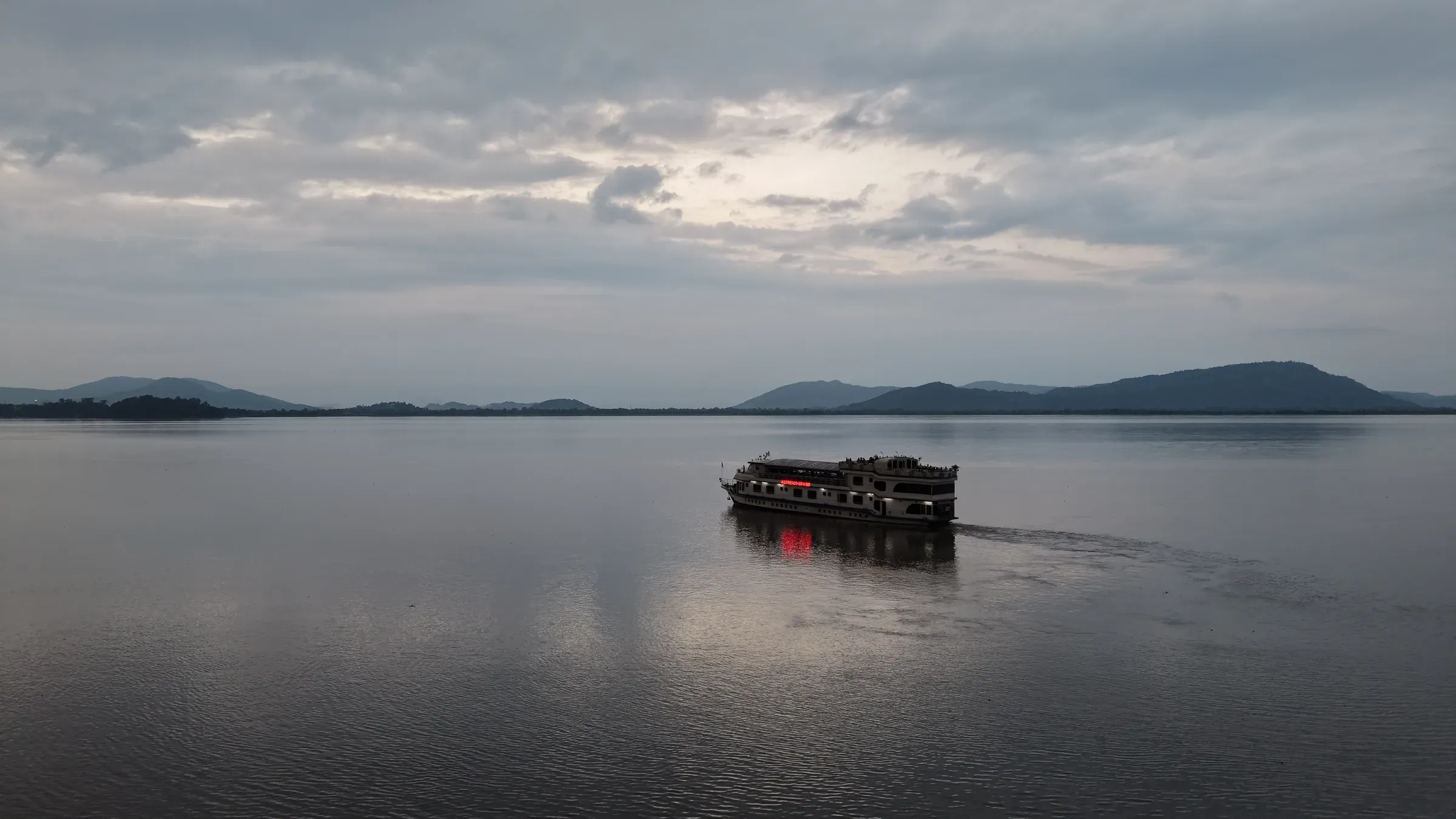
I grew up in Guwahati, left for Bangalore for four years, and came back home in 2024 to join my family business.
My parents started Alfresco in 1998 as Assam’s first floating restaurant, and when I returned, I began by working almost every job on board before gradually taking over more of the website, marketing and events.
Coming back after being away for a few years made me see Guwahati differently.
Some places I had taken for granted growing up suddenly felt special again. At the same time, there are plenty of places that appear on every “things to do in Guwahati” list that I personally wouldn’t prioritise if somebody had only a day or two here.
So this is not meant to be a complete directory of every attraction in the city.
It is closer to the list I would send a friend who messaged me saying, “I’m in Guwahati for two days. What should I actually do?”
And one disclaimer before we start: I run a river cruise company. So yes, when I tell you that the best way to experience the Brahmaputra is from a boat, I am obviously biased.
At least we have established that upfront.
1. Experience a Sunset on the Brahmaputra
In my opinion, the best way to experience a sunset over the Brahmaputra is on the Brahmaputra.
You can say I am biased, and you would be absolutely right, but I genuinely don’t think standing at the riverfront does the same justice to the scale of the river.
Especially from an open upper deck.
Once you move away from the bank, Guwahati begins to look completely different. The traffic disappears. The city becomes a strip of buildings and hills in the distance, Umananda sits in the middle of the water, and suddenly you realise just how wide the Brahmaputra actually is.
Our Sunset Cruise at Alfresco Grand is the one I would suggest if the sunset itself is your priority.
Get yourself a seat on the upper deck, order a drink and don’t spend the entire hour looking through your phone camera.
One of our cocktails that I particularly like is the Kaziranga Sunrise, made with Assam tea, jaggery syrup and Cherrapunji Gin. It is very Northeast India without trying too hard to be.
And if you have the whole evening, take the Dinner Cruise
The Dinner Cruise is personally very special to me for a different reason.
Every evening, we have an opportunity to introduce visitors to some part of Assam’s culture while sailing on the Brahmaputra.
We show a short documentary on Lachit Borphukan, followed by cultural performances including Sattriya, Gayan Bayan and Bihu.
That part matters to me.
We have people coming onboard from across India and around the world, and for some of them, that hour and a half may be their first introduction to Assam.
I want that introduction to actually feel like Assam.
2. Visit Kamakhya Temple, but Plan It Properly
Almost everyone coming to Guwahati has Kamakhya on their list.
And they should.
But the mistake many visitors make is treating Kamakhya like a normal sightseeing stop where you can allocate an hour, show up whenever convenient and continue with your day.
If you want to do a proper darshan, plan your morning around Kamakhya rather than fitting Kamakhya around everything else.
I would always recommend going as early as possible.
Even during periods that don’t feel like peak tourist season, the queues can become very long. On a good day, you may finish much faster. On a heavy-rush day, it can become an entirely different story.
I have personally stood in line for around five hours.
If darshan is important to you, I would also consider the Special Darshan option and book it through the official temple system well in advance. These slots can disappear quickly, so don’t assume you will arrive in Guwahati and arrange everything that morning.
Always check the official Kamakhya Temple website before visiting. Timings, access and booking arrangements can change, especially around major festivals and particularly busy periods.
If you simply do not have enough time for a full darshan, I would still recommend going up to Nilachal Hill and visiting the Kamakhya Temple complex.
You can walk around the temple, see the smaller shrines, observe the pilgrims and priests and experience the atmosphere without committing several hours to the main darshan queue.
It gives you a sense of why Kamakhya is so important to Guwahati and Assam, and it can take considerably less time.
If you are planning a full darshan, however, don’t schedule a flight, a long drive or another fixed-time activity immediately afterwards.
Give yourself some breathing room.
3. Walk Along the Brahmaputra Riverfront
Yes, I just told you the riverfront doesn’t do the sunset as much justice as a boat.
That does not mean I don’t like the riverfront.
I actually think it is one of the better places in Guwahati to simply spend some time without having an itinerary.
If you are an early riser and staying around Panbazar or Uzan Bazar, go in the morning.
Locals come here to walk, run and exercise, and there is an outdoor gym as well. Morning access is free until 10 AM, which makes it a particularly nice way to start the day.
In summer, I would avoid the middle of the day. There isn’t enough continuous shade for me to recommend walking around when the sun is directly overhead.
Evening is much better.
And sometimes you don’t need to “do” anything. Sit near the river, watch the ferries moving across and let the city slow down a little.
4. Visit the Mahabahu Brahmaputra River Heritage Centre
Very close to the riverfront is another place I think visitors overlook.
The Mahabahu Brahmaputra River Heritage Centre has been created around an old colonial-era bungalow overlooking the Brahmaputra.
The restored building, gardens and exhibits tell stories connected to the river, Assam and Guwahati.
I particularly like it because the building itself is part of the experience.
Guwahati has lost many of its older Assam-type and colonial-era buildings over the years, so being able to walk through a restored property overlooking the river gives you a small glimpse of another version of the city.
You don’t need half a day here. Combine it with the riverfront, Uzan Bazar or Panbazar.
5. Take the Ferry to Umananda
If you have never been onto the Brahmaputra before, Umananda Island is another easy way to experience it.
A short ferry ride takes you from the city to Peacock Island, right in the middle of the river.
At the top is Umananda Temple, a Shiva temple originally built during the Ahom period.
The temple is worth visiting, but honestly, the boat ride and the location are half the experience for me.
Once you are standing on that small island with Guwahati on either side of you, you get another sense of the scale of the river.
It doesn’t need to become a major half-day expedition. An hour or two is enough for most people.
One thing to keep in mind is the return ferry timing. The last ferry from Umananda generally leaves around 4 PM, but timings can change depending on the season, river conditions and the operator.
Always confirm the final return ferry directly with the ferry providers before crossing.
And if you happen to be there during Shivaratri, expect a very different and much busier experience.
6. Spend Some Time Around Dighalipukhuri, Ambari and Uzan Bazar
This is one area where I would actually recommend walking around rather than jumping from attraction to attraction in a car.
Dighalipukhuri is surrounded by some beautiful old trees and sits next to a part of Guwahati where several places worth seeing are within walking distance.
You have the Assam State Museum, the Planetarium, Ambari, Uzan Bazar and several cafés nearby.
The Assam State Museum is particularly useful if Guwahati is the beginning of a longer trip through Assam. It gives you some historical and cultural context before you start travelling around the state.
Buy Assamese Handloom and Craft
If you want to take home something from Assam, this area is also a good place to look.
Purbashree and Pragjyotika in the Ambari area are useful stops for Assamese handloom and handicraft products.
You can look for textiles, traditional craft, decorative pieces and locally made products rather than buying generic souvenirs at the airport.
If you are interested in Assam’s silk traditions, this is also a convenient place to start looking at muga, eri and paat products without travelling outside Guwahati.
But even if you don’t enter every attraction or shop, I enjoy this part of town because it still has pockets of an older Guwahati.
Uzan Bazar especially has old Assam-type houses tucked between newer buildings, narrow neighbourhood streets and easy access to the river.
Which conveniently brings me to food.
7. Eat and Drink Your Way Through Guwahati
This is probably going to become the section people disagree with me about most.
There seems to be a new café opening in Guwahati every few days, and I definitely haven’t managed to visit all of them.
So I am not claiming these are the objectively “best cafés in Guwahati.”
These are simply places I have been to and would personally recommend.
11th Avenue
11th Avenue has been around for a long time by Guwahati café standards and is still one of those places a lot of us grew up going to.
There are multiple outlets now, but I like the Dighalipukhuri one because of the area around it.
Get a pizza, then walk around Dighalipukhuri and Uzan Bazar afterwards.
Hazael
For me, Hazael does some of the best croissants in the city.
Their smoothie bowls are good too.
If you want breakfast or something lighter rather than a full Assamese meal at 9 in the morning, this is an easy recommendation.
Pause
Pause is one of the newer places that seems to have become everyone’s local favourite very quickly.
The food is good, the coffee is reasonably priced and they have a nice breakfast menu.
My recommendation: Coconut Cloud Coffee.
The only problem is that Pause is quite small, so during peak hours it can become very crowded.
Go slightly off-time if you can.
Craftery
Craftery is a good option for coffee, particularly if you are vegetarian or looking for vegan food.
I would put it on the list for someone who wants a quiet café rather than a heavy meal.
Mocha
Mocha is one of those dependable places for both food and drinks.
Unlike many cafés, they serve alcohol as well, so it works better if you want to transition from coffee into an evening drink without changing locations.
Café Luit and Café Uzan
Part of the appeal of Café Luit and Café Uzan is their setting.
They are inside old-style houses in Uzan Bazar, and for someone curious about Guwahati’s older residential architecture, that itself is worth experiencing.
Tea Story has a similar charm because of the building. Personally, I used to enjoy the food there more than I do now, but I still like the space.
Michinga
If you want Northeast Indian food, Michinga is an easy recommendation.
My order would be the Naga smoked pork with dry bamboo shoot thali.
This is also where I would encourage visitors to understand that “Northeast Indian food” is not one cuisine. Assamese, Naga, Khasi, Mizo, Manipuri and other cuisines are very different from each other.
Heritage Khorikaa and Jetuka
For Assamese food, Heritage Khorikaa and Jetuka are both good starting points.
If it is your first Assamese meal, don’t complicate things. Order a proper thali and add one or two sides that interest you.
Try the khar. Try tenga. Eat the xaak.
And please don’t judge Assamese food only by how spicy it is. That is missing the point completely.
Uptown Café
Uptown Café has a great interior and the food has been consistently good whenever I’ve visited.
It is the kind of place I would suggest when someone wants somewhere slightly nicer to sit for a longer meal.
Kazu
Kazu is a small, youth-run ramen bar and I really like what they are doing.
Guwahati’s food scene has changed dramatically in the last decade, and places like Kazu are part of that story.
Not every meal you eat here needs to be “traditional Assamese food.”
Sometimes you should just have good ramen.
8. Ride the Ropeway Across the Brahmaputra
The Guwahati–North Guwahati ropeway is another good way to understand the scale of the Brahmaputra.
You travel above the river with views across the city, Umananda and the surrounding hills before reaching the North Guwahati side.
I wouldn’t build my whole day around the ropeway.
But if you are already near the riverfront and have some time, do it for the view.
That is enough reason.
If you want to spend longer on the North Guwahati side, you can combine it with Doul Govinda Temple before returning.
9. Visit Swahid Smarak Kshetra
This one will be missing from many older Guwahati travel blogs simply because it is new.
Swahid Smarak Kshetra at Boragaon is dedicated to the martyrs of the Assam Movement of 1979–1985.
If you are travelling through Assam and want to understand the state beyond temples, wildlife and tea gardens, I think places like this matter.
The Assam Movement continues to occupy an important place in the state’s modern history.
The memorial gives visitors a physical place to begin understanding that period rather than encountering it only as a paragraph in a guidebook.
10. Visit the Assam State Zoo if It Fits Your Trip
The Assam State Zoo cum Botanical Garden is right inside the city and covers a large green area around the Hengerabari hills.
I wouldn’t call it compulsory for every first-time visitor.
But if you enjoy zoos and botanical gardens, are travelling with children, or simply want a few hours surrounded by greenery without leaving Guwahati, it is worth considering.
It is also one of those places many of us in Guwahati associate strongly with childhood.
11. Go to Srimanta Sankardev Kalakshetra for a Broader Introduction to Assam
If Guwahati is your first stop before travelling deeper into Assam, Srimanta Sankardev Kalakshetra can be genuinely useful.
The complex brings together museums, traditional architecture, art, performance spaces and exhibits connected with Assam’s different communities and cultural traditions.
I wouldn’t rush through it.
Go if you are actually interested in understanding Assam a little better, rather than simply collecting another sightseeing stop.
If you have already spent several days exploring Assam’s villages, satras, museums and heritage sites, you may find some of the context familiar.
But for a first-day introduction, it works well.
12. Visit Balaji Temple if You Have More Time
The Purva Tirupati Sri Balaji Temple is architecturally very different from Kamakhya and most of Guwahati’s older temples.
Its South Indian temple architecture, large gopuram and clean complex make it a peaceful stop.
Would I choose it over Kamakhya if you have only one morning?
No.
But if you have two or three days in Guwahati and enjoy visiting temples, add it.
What I Would Skip if You Are Short on Time
I don’t think every famous place needs to be squeezed into one trip.
If you have only a day in Guwahati, I wouldn’t spend it driving from one corner of the city to another simply because an attraction appears on Google.
I would not try to fit Kamakhya, Balaji Temple, the zoo, Kalakshetra, Umananda, the ropeway and the riverfront into one day.
You will technically “cover” Guwahati and experience almost none of it.
Choose a few things and give them time.
The traffic can also completely destroy a beautifully planned itinerary, so keep that in mind when looking at distances on a map.
What I Would Do With Only 24 Hours in Guwahati
If a friend landed in Guwahati and told me they had exactly one full day, this is probably how I would plan it.
Early Morning: Kamakhya
If possible, start early and dedicate the first part of the day to Kamakhya Temple.
This gives you the best chance of completing darshan without losing most of the day to the queue.
If an early morning visit is not possible, you can absolutely go later. Just plan with the assumption that a full Kamakhya visit can take at least three hours, and sometimes considerably longer depending on the crowd.
That may mean sacrificing one or two other places from the itinerary.
If you only want to experience the temple complex and are not doing the full darshan, the visit can be much shorter.
Either way, check the official temple website before you go, especially during festivals and busy periods when timings and booking arrangements may change.
Late Morning: Breakfast and Coffee
Once you are done, head towards the centre of town.
If you want a café breakfast, I would pick somewhere like Hazael or Pause, depending on where you are staying.
Have coffee. Sit down for a bit.
If you managed the early Kamakhya start, you have earned it.
Around Noon: Dighalipukhuri, Assam State Museum and Uzan Bazar
Spend the next couple of hours around Dighalipukhuri, Ambari and Uzan Bazar.
If Assam’s history interests you, visit the State Museum.
If you want to take home Assamese textiles or craft, stop at Purbashree or Pragjyotika nearby.
Otherwise, walk around the area, explore some of the older streets and stop at one of the cafés inside an Assam-type house.
Don’t over-plan this part.
Lunch: Eat Assamese or Northeast Indian Food
For a first-time visitor, I would make lunch the proper local meal.
Go to Heritage Khorikaa or Jetuka for Assamese food.
Or, if you want to explore food from elsewhere in the Northeast, go to Michinga.
Eat properly because the evening is going to be on the river.
Afternoon: River Heritage Centre or Umananda
You probably won’t have time to do everything.
Choose between the Mahabahu Brahmaputra River Heritage Centre and a ferry ride to Umananda.
Personally, if the weather is good and the ferry timings work, I would choose Umananda.
Just make sure you confirm the last return ferry before crossing. It is generally around 4 PM, but don’t depend on that without checking locally.
If it is very hot, raining or you don’t want another boat journey before the evening cruise, do the Heritage Centre instead.
Sunset: Get on the Brahmaputra
This is where my bias returns.
Take the Sunset Cruise and go to the upper deck.
Put your phone away for at least ten minutes.
Order a drink.
Watch the city disappear slightly behind you and look west as the light begins changing over the Brahmaputra.
That, to me, is Guwahati.
Dinner
If you are taking only the Sunset Cruise, head out afterwards for dinner.
You can go Assamese again if you loved lunch, or do something completely different at Mocha, Uptown, Kazu or wherever suits the mood.
If you have chosen the Dinner Cruise instead, stay onboard for the cultural programme and buffet and let that be the end of the day.
You have already been awake since before Kamakhya.
That is enough.
A Final Thought on Guwahati
Guwahati is often treated as a gateway.
People land here and immediately leave for Shillong, Kaziranga, Tawang, Nagaland or somewhere else in the Northeast.
I understand why. The city is one of the main transport hubs of the region.
But I think that sometimes makes people overlook Guwahati itself.
It isn’t a city where every attraction is spectacular on its own. What makes it interesting is the combination: an ancient Shakti temple on a hill, an enormous river running through the city, old neighbourhoods beside new cafés, ferries moving between banks, Assamese food, contemporary Northeast culture and hills appearing almost everywhere between the buildings.
So if your itinerary gives you one evening here, don’t spend all of it inside the hotel.
And yes, preferably get on a boat.
I warned you about the bias.